- Inspire
- Innovate
- Integrate

Conserve Solutions provides piping stress analysis services in Bahrain for EPC contractors, plant owners, and engineering consultants. Our engineers evaluate piping systems for pressure, temperature, weight, sustained and occasional loads, and other project-specific external or dynamic effects. The assessment helps confirm code compliance, acceptable displacements, equipment nozzle loads, and support loads during design. We use CAESAR II, AutoPIPE, CAEPIPE, PEPS, Rohr2, and PASS/START-PROF where required by the project and client standard. The analysis scope is selected based on the applicable piping code, design conditions, layout, equipment interfaces, and project requirements.
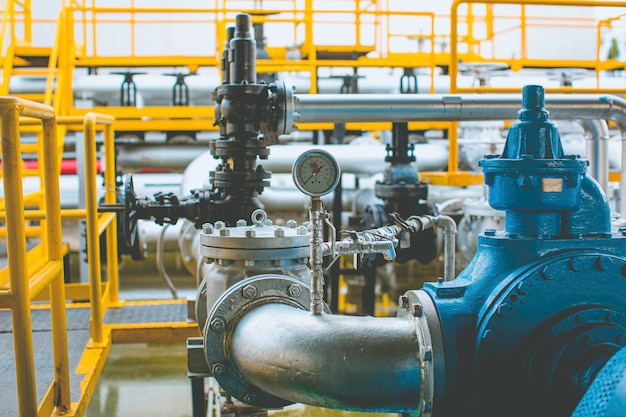
What Does Piping Stress Analysis Involve?
Piping stress analysis, evaluates how a piping system responds to pressure, temperature changes, weight, support and restraint conditions, and applicable external or occasional loads. The study checks code stress limits, displacements, support reactions, and equipment nozzle loads so that the piping layout and support arrangement can be finalized with the required design margins.
Static Stress Analysis for Piping Systems

Our static analysis scope may include:
- Sustained load cases, including pressure and weight effects - Thermal expansion / displacement load cases - Occasional load cases, such as wind or seismic effects where applicable - Equivalent-static load cases where permitted by the applicable code or project basis
Dynamic and Analysis for Piping
Where required by the project, dynamic and vibration assessments may include modal analysis, harmonic analysis, vibration screening/assessment, and time-history analysis. Water hammer or other hydraulic transient studies are treated as an interfacing hydraulic analysis, with resulting transient loads considered in the piping stress model where applicable. - Modal analysis - Harmonic analysis - Vibration assessment - Time-history analysis - Transient/hydraulic load interface for piping stress assessment
Piping Stress Analysis Software for Bahrain Projects
We use industry-recognized piping stress analysis platforms selected to suit the applicable code, project requirements, and client software standard:
Pipe Support Design Support Load Assessment
Where the stress model identifies excessive stress, displacement, support reaction, or equipment nozzle loading, we review the support and restraint arrangement and recommend suitable changes. Depending on the project scope, this may include support selection, restraint locations, spring support requirements, and support load schedules. Detailed structural design of supporting steel or foundations is excluded unless specifically included in the project scope.
Pipe Stress Analysis Methodology
Industries We Support
Our piping stress analysis services can support oil & gas, petrochemical and refining, power generation, water and wastewater, district cooling and utilities, and other industrial facilities where piping flexibility, loads, vibration, or equipment interface checks are required.
Reason: Broaden the market without implying stress analysis is only relevant to high-temperature/high-pressure plants.
– Oil & Gas
– Petrochemical & Refining
– Power Generation
– Water & Wastewater
– District Cooling & Utilities
– Industrial Facilities
Why EPC Clients Choose Our Piping Stress Analysis Services
Project-Experienced
Our engineers apply piping stress analysis and support engineering experience to project-specific design conditions, codes, layouts, and equipment interfaces.
Project-Specific Analysis
Analysis models, load cases, acceptance criteria, and support reviews –are developed around the project piping class, design basis, equipment requirements, and applicable code.
Technical Review & Quality Control
Stress models and calculation reports are checked against the applicable code requirements, load cases, support conditions, displacements, and equipment allowable loads defined for the project. Actionable Engineering Outputs
The analysis identifies overstress, excessive displacement, support reactions, nozzle loads, and other design issues, providing inputs for routing, support, and restraint adjustments.
Why Choose Conserve Solutions?
Expertise and Experience
Our team comprises seasoned professionals with extensive experience and in-depth knowledge in the field of piping stress analysis.
Tailored Solutions
Recognizing the unique characteristics of each project, our approach is carefully tailored with this understanding in mind. Our services are personalized to meet your specific requirements and objectives, whether it involves refining designs, improving efficiency, or ensuring the safety of your piping systems.
Unwavering Commitment to Excellence
At Conserve Solutions, our dedication to delivering top-notch piping stress analysis services remains resolute.
Comprehensive Analysis
Utilizing state-of-the-art tools and methodologies, we conduct thorough stress analyses on your piping systems. This process identifies potential issues and provides solutions to enhance performance and reliability.
Frequently asked questions
FAQ's
Piping stress analysis evaluates the response of piping to pressure, temperature, weight, restraint conditions, and applicable external loads. It is used to demonstrate compliance with the governing piping code and to identify displacement, support reaction, and equipment nozzle load issues that may require design changes.
It is typically performed during FEED and detailed design for critical or flexibility-sensitive lines, and may also be required for brownfield modifications, rerouting, de bottlenecking, equipment replacement, changed operating conditions, or investigation of existing piping issues.
Typical checks include sustained stresses from pressure and weight, displacement /expansion stresses, occasional loads such as wind or seismic effects where applicable, and dynamic effects such as vibration. Equipment nozzle loads and support reactions are also commonly evaluated against project or vendor allowable.
Piping vibration can result from flow-induced excitation, rotating equipment, reciprocating equipment, pulsation, acoustic excitation, or transient events. Depending on the project, assessment may include screening, modal analysis, harmonic analysis, time-history analysis, or interface with a hydraulic transient study.
Pipe support engineering uses the stress model to establish support locations, restraints, spring requirements, and support reactions needed to control piping stresses and movements. The detailed design of structural steel or foundations is a separate discipline unless included in the project scope.
We use CAESAR II, AutoPIPE, CAEPIPE, PEPS, Rohr2, and PASS/START-PROF, selecting the platform based on project requirements, applicable code, and client software standards.
The duration depends on the number and criticality of lines, model complexity, available inputs, required load cases, review cycles, and project schedule. Contact our team with the line list and design basis for a project-specific estimate.
We support piping stress analysis requirements across oil & gas, petrochemical and refining, power, water and wastewater, district cooling and utilities, and other industrial projects, subject to project scope and applicable codes.
Get in touch
Have any other questions?
Technical Samples



Quick Links
Copyrights © 2026. Conserve Solutions. All Rights Reserved.
BIM Data, Cost & Handover Services
BIM Coordination & Constructability
BIM Modelling & Digital Delivery
Discipline BIM Modeling (Architectural, Structural, MEP)
BIM Automation & Digital Engineering
BIM Data, Cost & Handover Services
Structural & Steel Detailing Services
Architectural Design, Visualization & Presentation Support
BIM Coordination & Constructability
BIM Modelling & Digital Delivery