- Inspire
- Innovate
- Integrate

- Home
- Smoke Simulation Analysis for Pedestrian Bridge
Smoke Simulation Analysis for Pedestrian Bridge
Project Title
Pedestrian Bridge Connection
Scope:
CFD Smoke Simulation Study to evaluate emergency ventilation efficiency and ensure tenable conditions for safe evacuation in the event of a fire.
Project Overview
The Pedestrian Bridge serves as a critical link between the Mall and the adjacent Metro Station, facilitating daily foot traffic of thousands of visitors. Due to the enclosed nature of the bridge, it was essential to assess and ensure the effectiveness of the emergency smoke ventilation system under fire conditions.
Conserve Green Building and MEP Solutions carried out a detailed Computational Fluid Dynamics (CFD) analysis to simulate fire and smoke behavior, assess the ventilation design, and verify compliance with NFPA 92 standards for smoke management.
Objective
- Evaluate the effectiveness of mechanical and natural ventilation during a fire event.
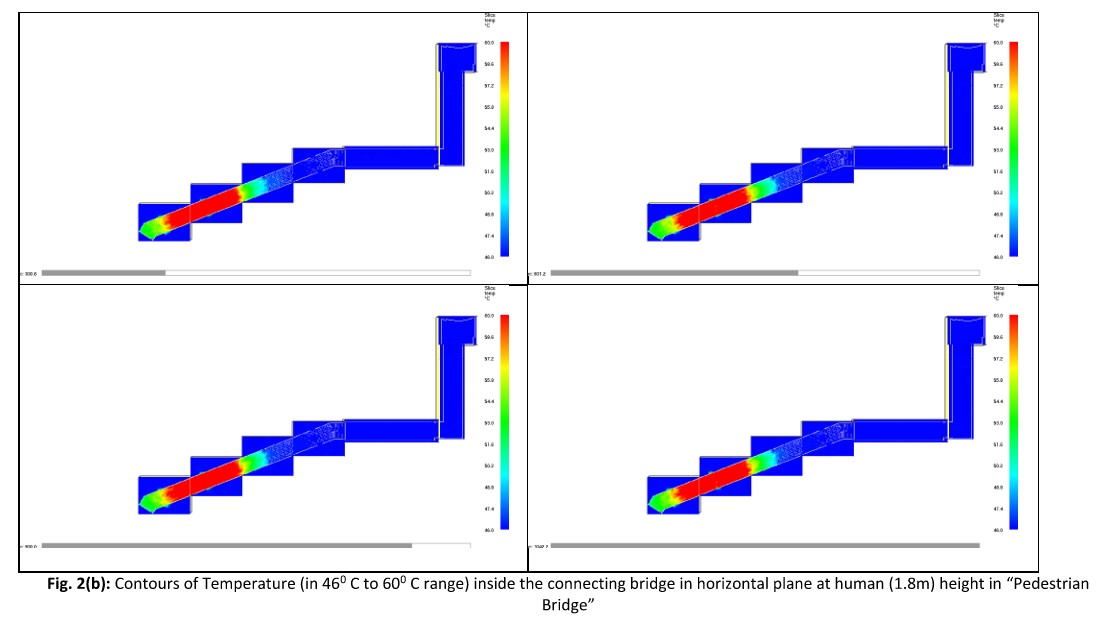
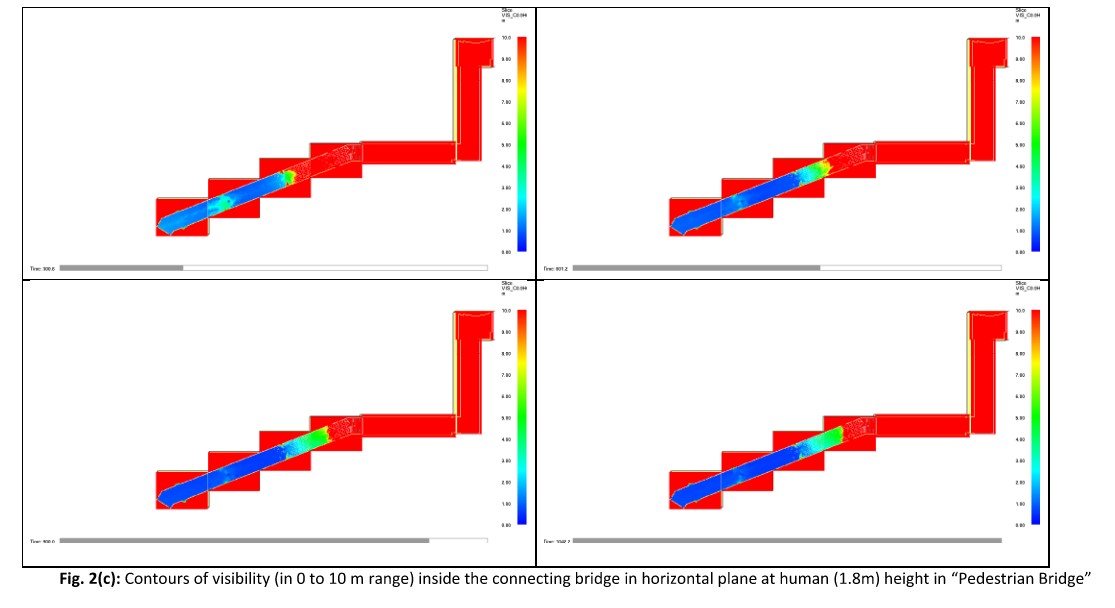
- Maintain tenable conditions (visibility > 10 m, temperature < 60°C) to allow safe evacuation.
- Validate the performance of Automatic Opening Vents (AOVs) and exhaust systems using CFD tools.
Simulation Setup
- Fire Load: 500 kW fire scenario modeled with a combination of polyurethane and wood (50-50%).
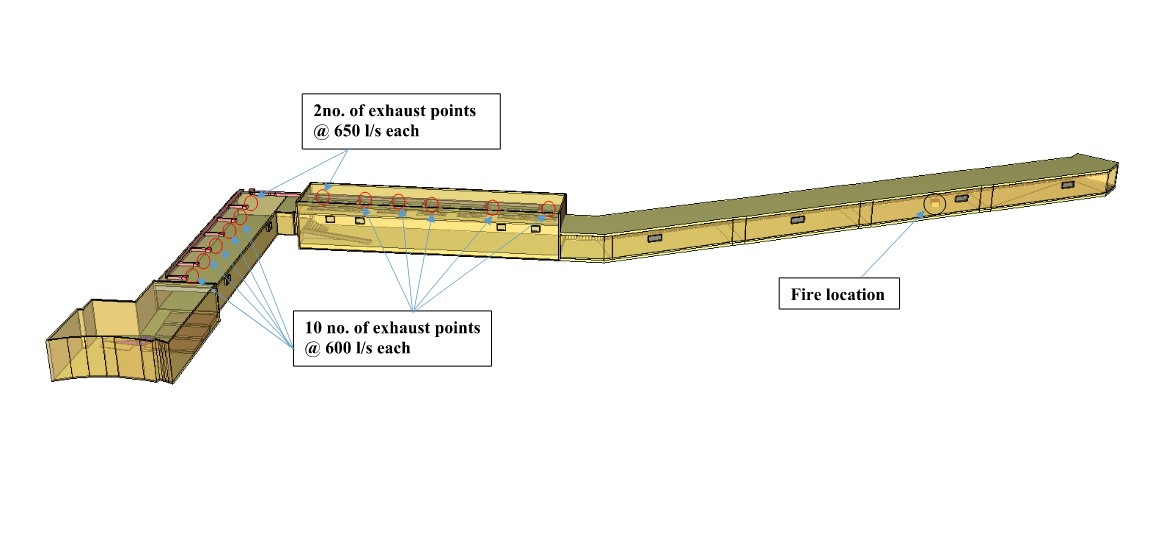
- Fire Source: Central location in the bridge, 1.2m x 1.2m x 1.2m in size.
- Total Heat Release Rate Modeled: 2,700 kW (with peak fire curve at 500 kW).
- Simulation Duration: 20 minutes (as per NFPA 92 requirements).
- Detection & Activation Delay: 120 seconds post-ignition, exhaust fans and AOVs are triggered.
- Ambient & Initial Conditions: Ambient temperature 46°C (hot weather conditions in Qatar).
Ventilation System
Mechanical Exhaust:
- 10 exhaust points @ 600 L/s
- 2 exhaust points @ 650 L/s
Natural Makeup Air:
- Automatic Opening Vents (AOVs) activated upon fire detection.
Key Results
Velocity Distribution
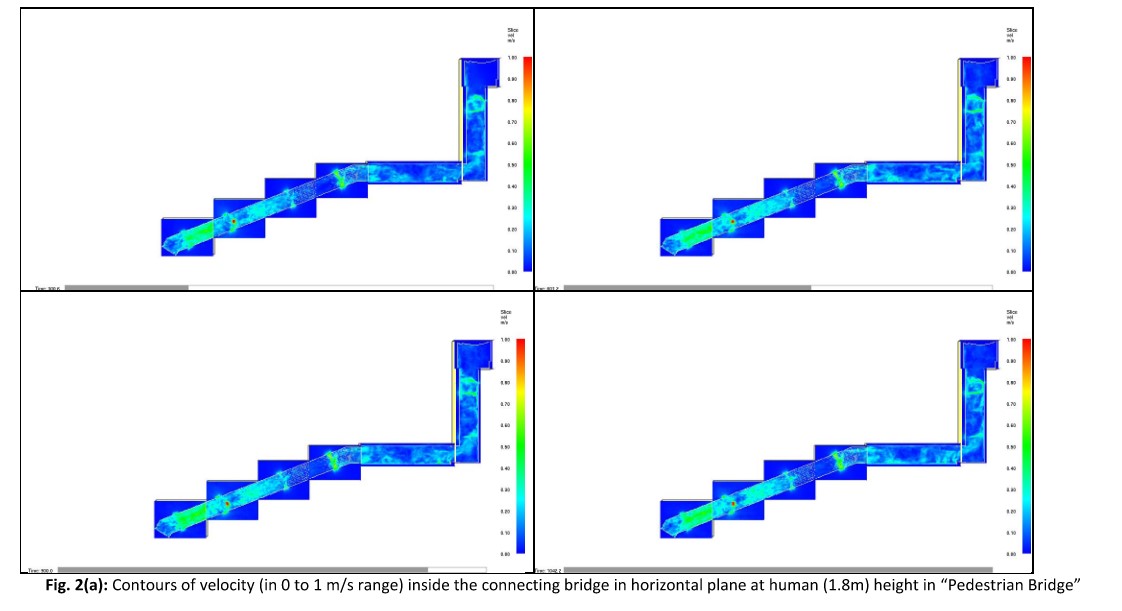
- Air velocities remained within acceptable levels at occupant height (1.8m), ensuring no high turbulence zones that could hinder evacuation.
Temperature Profile
- Initially manageable, but the temperature exceeded 60°C at occupant level after approximately 300 seconds post fire initiation, indicating a breakdown of tenable conditions without strong mechanical exhaust support.
Visibility Analysis
- Visibility dropped below the safe threshold (10m) after 5 minutes, especially near the fire source.
- Adequate visibility was maintained longer in zones supported by mechanical exhaust, emphasizing its importance.
Smoke Layering
- Smoke accumulated near the ceiling initially but began to stratify downward as time progressed. Without mechanical extraction, smoke lingered at head height, impeding safe movement.
Impact
This study provided crucial insights into the emergency preparedness of a public-use pedestrian structure. The results supported the design decisions and enabled the implementation of enhanced safety strategies, ensuring life safety, design compliance, and operational reliability in a critical infrastructure connection in Qatar.
Images

Conclusion
- Mechanical ventilation is critical in maintaining tenable conditions in the Pedestrian Bridge.
- Natural ventilation alone is insufficient during fire events, especially under high ambient temperatures.
- The analysis validated the necessity of timely activation of AOVs and exhaust fans to facilitate safe evacuation.
- The smoke simulation also offered visual verification of smoke movement, aiding design optimization and emergency response planning.

Quick Links
Copyrights © 2026. Conserve Solutions. All Rights Reserved.
BIM Data, Cost & Handover Services
BIM Coordination & Constructability
BIM Modelling & Digital Delivery
Discipline BIM Modeling (Architectural, Structural, MEP)
BIM Automation & Digital Engineering
BIM Data, Cost & Handover Services
Structural & Steel Detailing Services
Architectural Design, Visualization & Presentation Support
BIM Coordination & Constructability
BIM Modelling & Digital Delivery