- Inspire
- Innovate
- Integrate

- Home
- Chiller Plant Manager (CPM)
Chiller Plant Manager (CPM)
EXPLORE THE FEATURES
Chilled water plants are the energy backbone of large buildings and industrial facilities, and even small inefficiencies can translate into major operational costs. Chiller Plant Manager (CPM) from Conserve Solutions is an analytics-driven service layer that continuously supervises your entire plant-chillers, cooling towers, pumps, and auxiliaries-to keep it operating at peak efficiency and reliability.
By combining advanced controls, real-time data acquisition, and engineering expertise, CPM turns your plant into a smart, self-optimizing system. It helps reduce kW/ton, stabilize operations, and provide the performance transparency needed for both operations and sustainability teams.
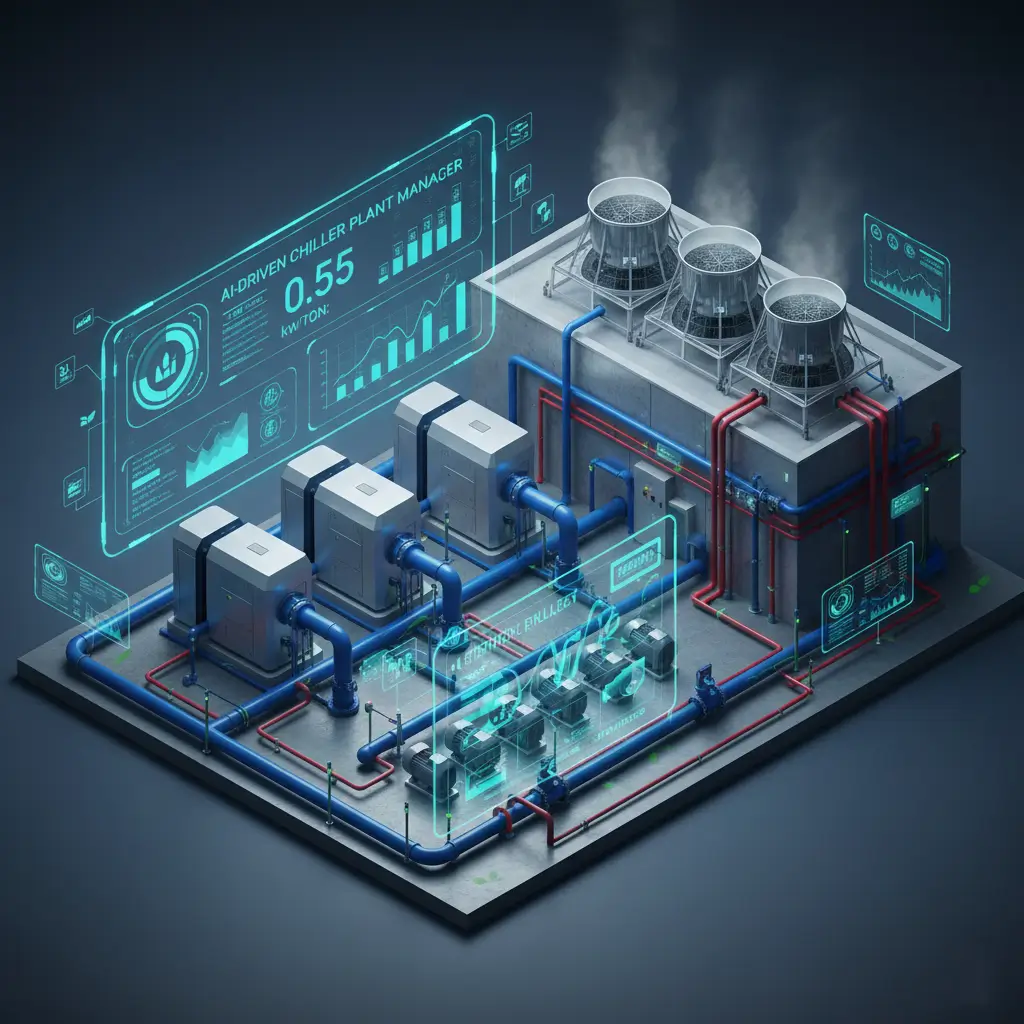
Services We Provide

Plant Performance Supervision
24/7 monitoring of chiller, pump, and cooling tower KPIs (kW/ton, COP, load, approach temperatures, runtimes) with clear views at equipment and system level.

Dynamic Chiller Sequencing
Intelligent staging and loading of chillers and pumps based on real-time demand, efficiency curves, and operating constraints to minimize energy use.

Setpoint Optimization
Rule-based and data-driven detection of issues such as degraded chiller efficiency, abnormal tower or pump behavior, sensor faults, and control anomalies.

Fault Detection & Diagnostics (FDD)
Rule-based and data-driven detection of issues such as degraded chiller efficiency, abnormal tower or pump behavior, sensor faults, and control anomalies.

Performance Benchmarking & Reporting
Baseline vs actual performance tracking, seasonal and daily profiles, and auto-generated reports for management review, audits, and sustainability teams.
Benefits of
Chiller Plant Manager (CPM) with Conserve
Lower Energy Cost per Ton
Optimized sequencing and setpoints reduce chiller and pump power consumption, improving kW/ton and cutting utility bills.
Higher Plant Reliability
Early detection of anomalies, combined with clear diagnostics, helps prevent unplanned outages and extend equipment life.
Improved Capacity Utilization
Unlock hidden capacity by improving how existing equipment is operated, often deferring or avoiding capex on new chillers.
Transparent Performance Visibility
Operations, energy, and leadership teams gain a single version of truth on plant performance, helping align decisions with data.
Stronger Sustainability Outcomes
Documented energy savings, reduced emissions, and performance KPIs directly support ESG, green building, and net-zero programs.
Why Choose
Conserve Solutions?
End-to-End Plant Understanding
Strong MEP, energy modeling, and commissioning background ensures CPM is grounded in real plant physics, not just generic analytics.
Non-Disruptive Integration
Designed to sit on top of existing BMS/DDC infrastructure, leveraging open protocols and your current control architecture.
Proven Optimization Approach
A structured methodology—from data collection and baselining to tuning and continuous improvement—reduces risk and accelerates results.
Scalable Architecture
Suitable for a single central plant or a portfolio of sites, with consistent dashboards and reporting standards across locations.
Outcome-Focused Engagement
Engagements are aligned to measurable objectives such as target kW/ton, runtime balance, or specific cost and carbon reduction goals.
Turn Your Energy Data into Decisions
Want your chiller plant to run at peak efficiency every hour of the year, not just on commissioning day?
Talk to our Chiller Plant Manager (CPM) team today and discover how data-driven optimization can cut costs, increase reliability, and support your sustainability roadmap.
Frequently Asked Questions
FAQ's
CPM is a service and technology layer that continuously monitors, analyzes, and optimizes the performance of your entire chiller plant to improve efficiency, reliability, and capacity.
No. CPM is designed to integrate with your existing BMS and field controllers using standard protocols, adding analytics and optimization without disrupting core controls.
Depending on current operation, plants typically see double-digit percentage reductions in chiller and pump energy, along with better load distribution and reduced runtime stress.
Data is acquired from existing meters, sensors, and controllers, and where needed, additional points are instrumented to capture critical temperatures, f lows, and power.
Is CPM suitable for multi-chiller or multi-building systems?
Get in Touch
Have Any Other Questions?

Quick Links
Copyrights © 2026. Conserve Solutions. All Rights Reserved.
BIM Data, Cost & Handover Services
BIM Coordination & Constructability
BIM Modelling & Digital Delivery
Discipline BIM Modelling (Architectural, Structural, MEP)
Construction & IFC Models
BIM Automation & Digital Engineering
BIM Data, Cost & Handover Services
Structural & Steel Detailing Services
Architectural Design, Visualization & Presentation Support
BIM Coordination & Constructability
BIM Modelling & Digital Delivery