- Inspire
- Innovate
- Integrate

- Home
- Revit Model Optimization and Quality Enhancement
Revit Model Optimization and Quality Enhancement
Project Title
Revit Model Optimization and Quality Enhancement
Scope:
Model Optimization
Problem Statement
During our BIM coordination phase, our team encountered significant model performance issues across multiple Revit disciplines. These issues included:
- Large file sizes due to unused content and imported CAD files
- Duplicate and unconnected elements
- Unplaced rooms and views
- Excessive Revit warnings
- Non-compliance with BIM modeling standards
- Improper workset management with zero-element worksets
Such conditions posed risks for:
- Increased coordination delays
- Inefficient collaboration across disciplines
- File corruption and unstable performance
- Inaccurate quantity take-offs and documentation
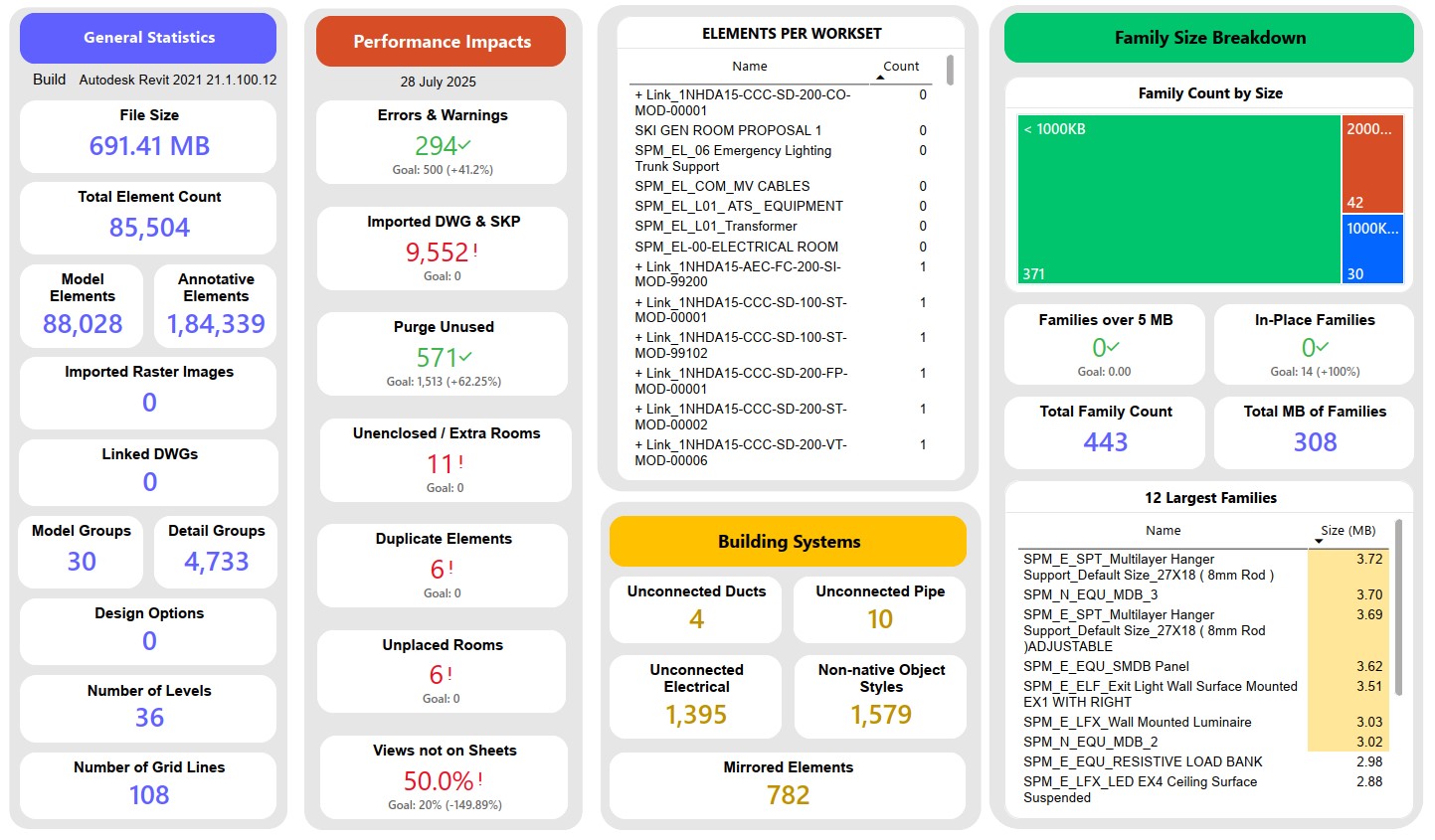
This is a sample model report that includes all the necessary information required to identify and rectify the issues.
Objective
- Audit and evaluate Revit model health using Autodesk’s BIM Interoperability Tools
- Identify and resolve model performance bottlenecks
- Reduce file size and eliminate data clutter
- Ensure the model adheres to project BIM execution standards
- Demonstrate our organization’s capability in offering high-quality Revit model optimization services
Tools & Technology Used
Tool/Method | Purpose |
BIM Interoperability Tools (Model Checker) | Generate model health reports, identify warnings, unplaced/unused elements |
pyRevit | Identify and resolve group issues, automate repetitive clean-up tasks |
Conserve Box Plugin | Remove embedded DWG files and manage empty worksets |
RV Family Purge | Eliminate unused family types to reduce file size |
Dynamo Scripts | Automate detection of duplicate elements and batch cleanups |
Native Revit Tools | Room and view schedules, Purge Unused, Warning Dialog clean-up |
Implementation Process
1. Initial Audit & Assessment

- Used Revit Model Checker to generate a detailed health report
- Categorized issues into High, Medium, and Low priority based on impact
2. Imported CAD Files

- Detected and removed 100+ embedded DWG files using Conserve Box
- Converted essential references into Linked CAD files instead
3. Duplicate Elements
- Ran custom Dynamo scripts to locate and delete duplicate elements by checking geometry, category, and coordinates
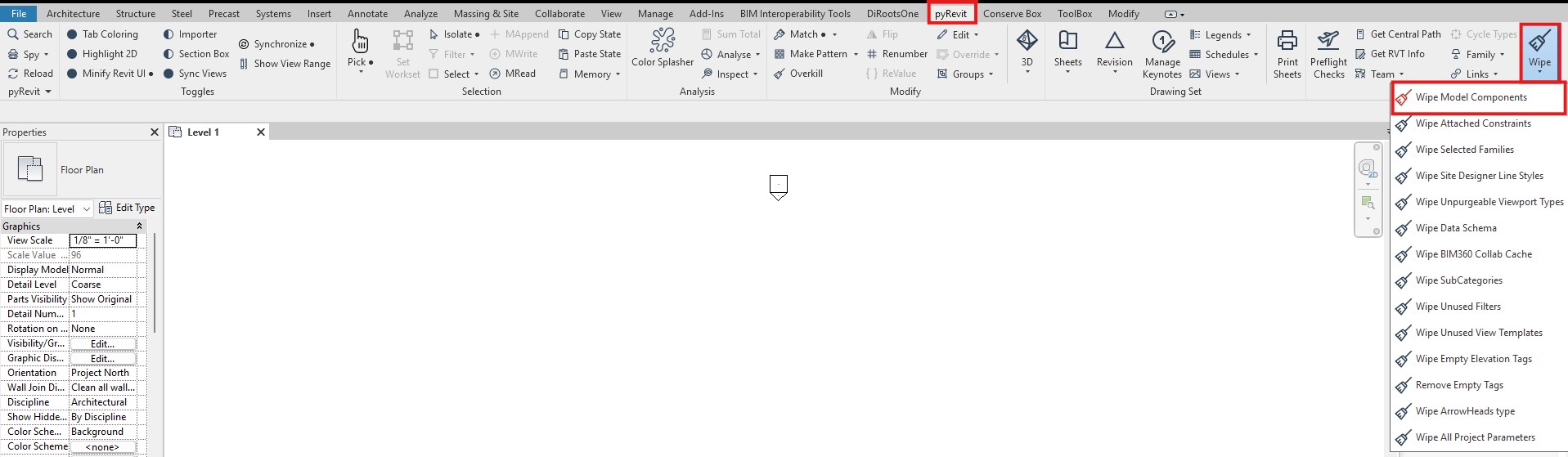
4. Model and Detail Groups
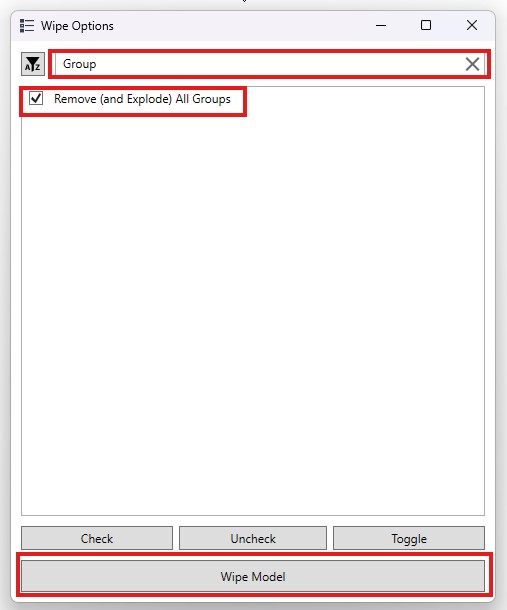
- With pyRevit, reviewed and converted excessive groups into reusable families or exploded them where appropriate
5. Unused Content & Families

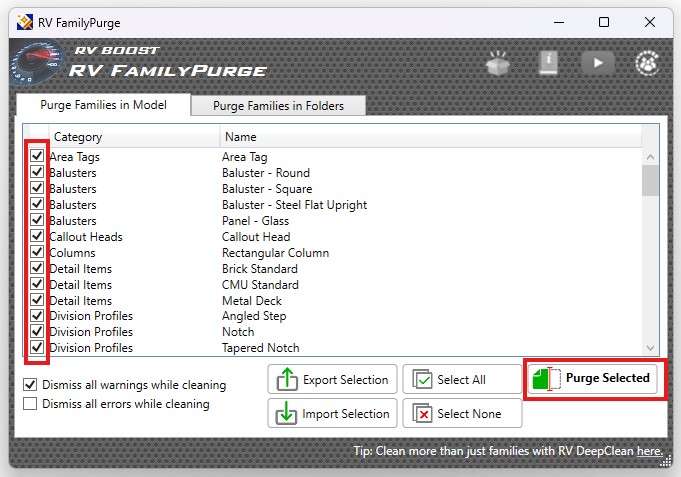
- Executed RV Family Purge to clean out unused family types, types, and materialsApplied Purge Unused under Manage tab to complete the family purge process.
6. Unplaced Rooms and Views

7. Zero-Element Worksets
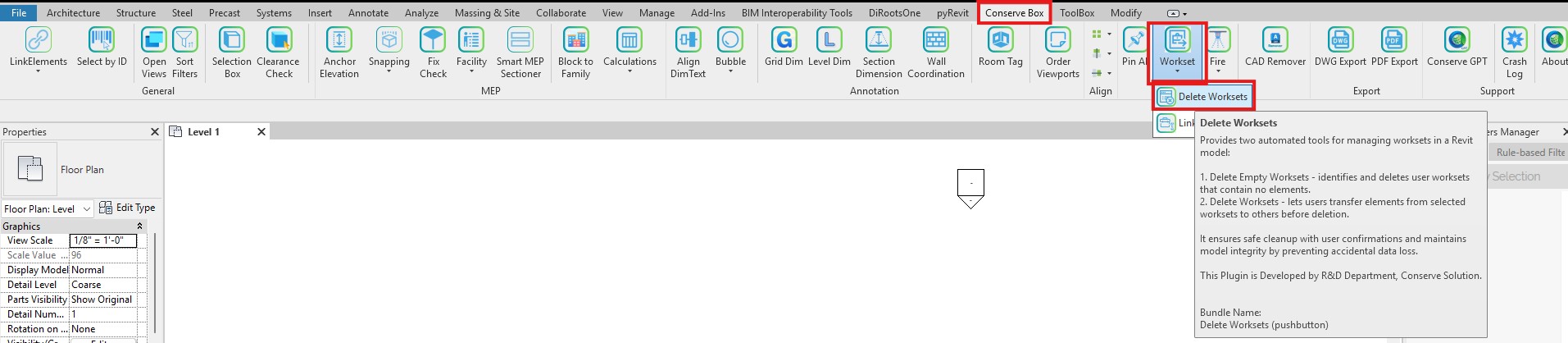
- Detected and removed zero-element worksets using Conserve Box’s workset filter feature
8. Verification
- Re-ran Model Checker after all clean-up actions
- Compared file metrics before and after clean-up
Outcomes Achieved
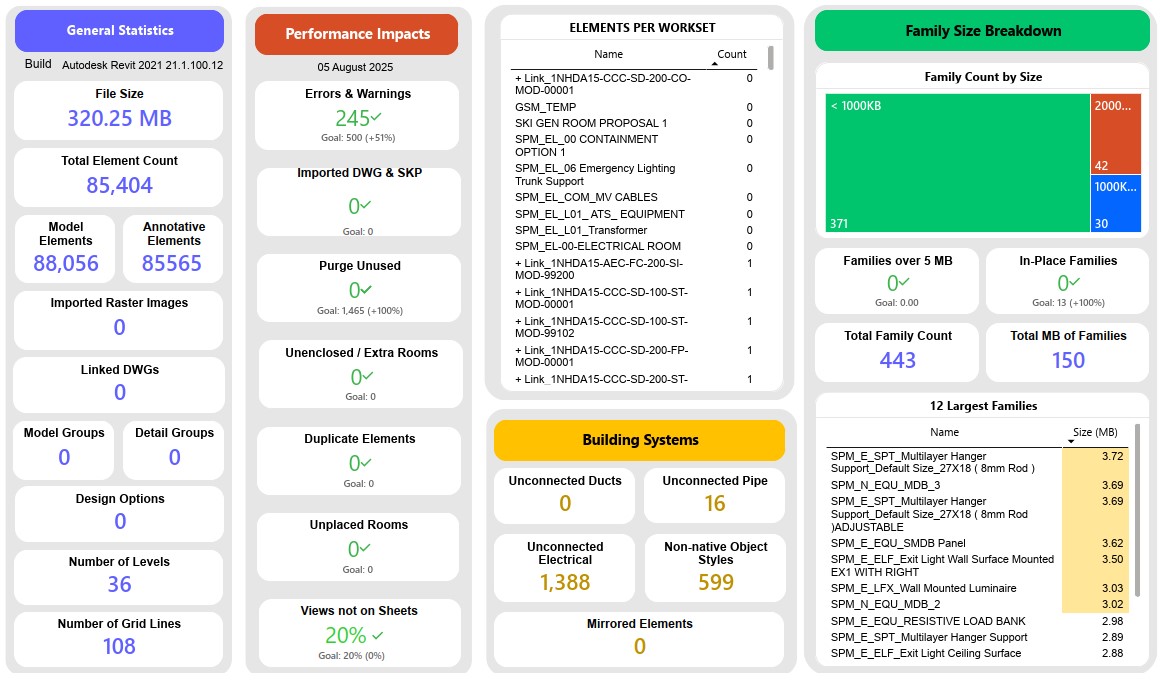
The final model audit report clearly demonstrates the significant impact of our optimization efforts. After implementing targeted actions—such as removing imported DWG files, purging unused elements, eliminating duplicate items, and cleaning up worksets—the model file size was reduced substantially. This improvement not only enhanced model responsiveness but also ensured smoother collaboration across teams. The reduced file size shown in the report validates the effectiveness of our cleanup strategy and reinforces our organization’s capability to deliver high-quality, efficient BIM models.
Benefits & Impact
- Improved Model Health & Responsiveness
- Reduced Documentation Errors and Quantity Conflicts
- Streamlined Coordination Among Disciplines
- Demonstrated Adherence to BIM Standards
- Proved Internal Capability to Offer Professional Model Cleanup Services

Conclusion
This case study serves as clear evidence of our company’s ability to identify, resolve, and optimize complex Revit models using industry-standard tools like BIM Interoperability Tools, pyRevit, Dynamo, RV Family Purge, and Conserve Box.
By standardizing our approach and applying automation where possible, we were able to:
- Achieve measurable performance improvements
- Eliminate coordination risks
- Provide a cleaner and more efficient model ready for downstream uses
Our team is now confident in offering these model auditing and cleanup services as part of our BIM deliverables to clients seeking quality, precision, and performance.

Quick Links
Copyrights © 2026. Conserve Solutions. All Rights Reserved.
BIM Data, Cost & Handover Services
BIM Coordination & Constructability
BIM Modelling & Digital Delivery
Discipline BIM Modeling (Architectural, Structural, MEP)
BIM Automation & Digital Engineering
BIM Data, Cost & Handover Services
Structural & Steel Detailing Services
Architectural Design, Visualization & Presentation Support
BIM Coordination & Constructability
BIM Modelling & Digital Delivery