- Inspire
- Innovate
- Integrate

- Home
- Case Studies
- Architectural BIM from RIBA Stage 2 to Planning Submission: How We Modelled Units for a Birmingham Residential Scheme
Architectural BIM from RIBA Stage 2 to Planning Submission: How We Modelled Units for a Birmingham Residential Scheme
Project Snapshot
Parameter | Detail |
Client | Architecture Practice — Multi-Unit Residential Development |
Sector | Residential / Planning |
Location | Birmingham, United Kingdom |
Platform / Software | Autodesk Revit, AutoCAD, Autodesk Docs |
Standards | UK BIM Framework, RIBA Plan of Work Stages 2–3, RICS Area Measurement (GIA/NIA) |
Service | Architectural BIM Modelling, Model Audit & Restructuring, Planning Drawing Package |
Key Outcome | Planning submission delivered on programme from a fully restructured Revit model |
Problem Statement
When your design team is spending more time fixing drawings than developing the scheme, the project isn’t moving forward — it’s standing still. A Birmingham practice found themselves in exactly that position: a planning submission deadline closing in, a team buried in 2D corrections, and a model that was creating more problems than it solved. The Revit file had been developed from Stage 2, but by Stage 3 it had become inconsistent — duplicate wall types, broken room boundaries, misaligned levels, and no standardised view templates. Drawings extracted from the model required extensive manual correction, area schedules couldn’t be trusted, and the planning submission was at risk.
Impact of Challenges
- Planning submission at risk – Drawing quality and data inconsistencies meant the package was not fit for submission to the local planning authority.
- Team capacity overwhelmed – In-house staff were spending more time fixing 2D outputs than progressing the design, creating a bottleneck at Stage 3.
- Model not fit for purpose – Inconsistent families, broken room data, and no proper BIM structure meant the model could not generate reliable area schedules, sections, or elevations.
- No baseline for Stage 4 – Without a clean model, the practice would face the same problems again during Technical Design, compounding rework across future stages.
- Cost exposure – Every manual 2D correction, every drawing reissue, and every delayed design decision added to the project cost. The cumulative impact of operating from an unreliable model was significant and entirely avoidable.
Conserve Solutions - How We Solved It
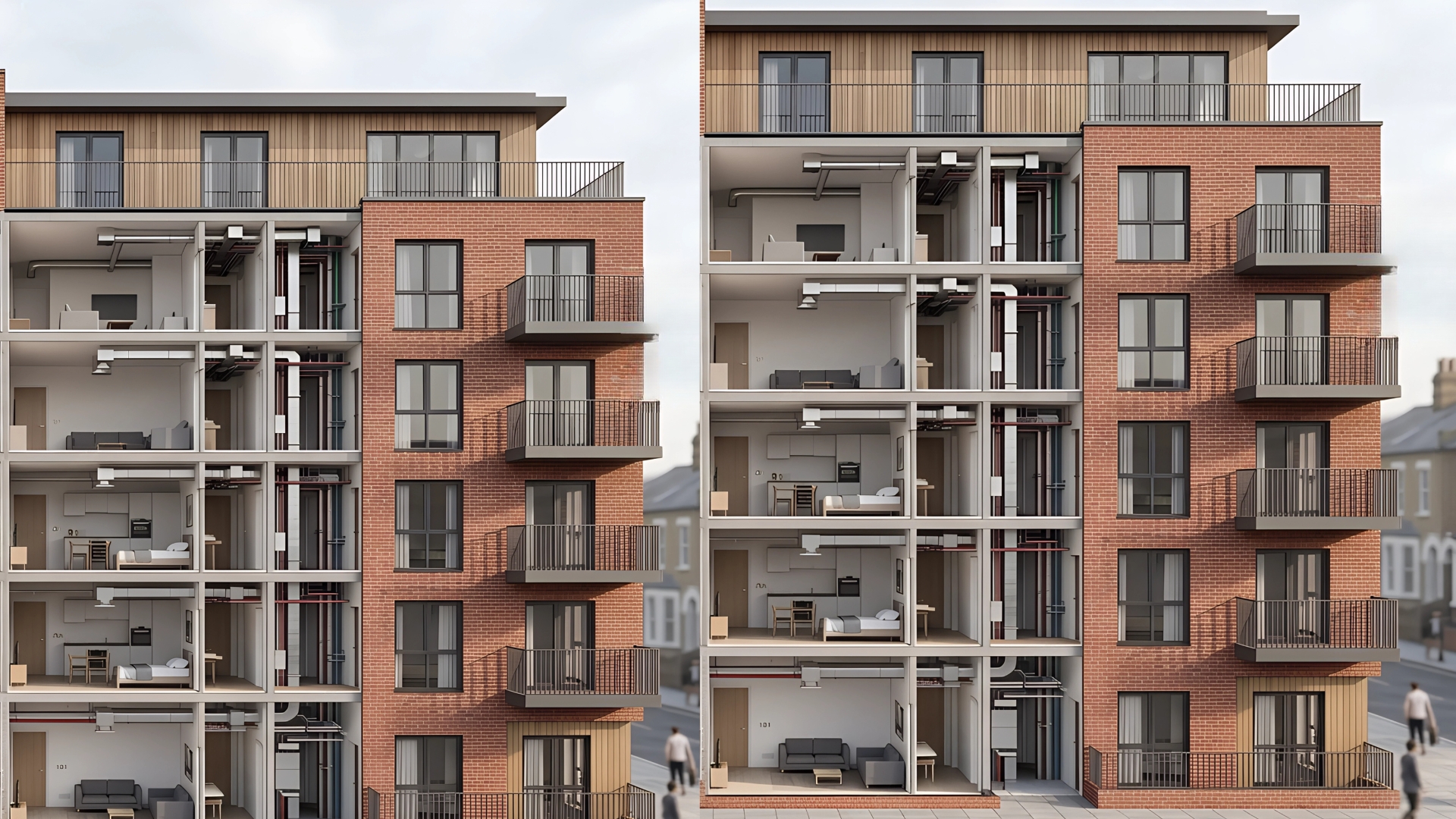
a. Thinking (Strategy)
The design intent was sound – the problem was the model structure. Rebuilding from scratch would waste weeks of design development already completed. We proposed auditing and restructuring the existing model: fix the framework, standardise the components, and extract the full planning package from a single corrected source – giving the practice a model they could continue developing through Stage 4 and beyond.
b. Execution (What We Built)
Ran a full model audit – warnings, duplicate types, broken families, room boundary errors, unused elements. Restructured wall types, door/window families, floor and ceiling configurations to a consistent standard. Fixed levels, grids, and shared coordinates. Set up proper room boundaries for every residential unit with verified area data (GIA/NIA to RICS standards). Created standardised view templates for plans, sections, elevations, and schedules. Modelled all unit types accurately and extracted the complete planning drawing package directly from the corrected model: floor plans, elevations, sections, roof plan, site context, unit mix schedule, and area schedules.
c. Integration (Impact Layer)
Handed the practice a clean, properly structured Revit model alongside the planning package. Every drawing, schedule, and area calculation now comes from the same single source. The model is set up with correct templates, families, and standards so the in-house team can continue developing it through RIBA Stage 4 without reverting to manual 2D corrections.
Before vs After Automation (High Impact Section)
Metric | Before | After | Improvement |
Model Quality | Inconsistent – broken families, duplicates | Audited & restructured to BIM standard | Clean baseline |
Drawing Output | Manual 2D corrections required | Extracted directly from model | Single source of truth |
Area Schedules | Unreliable – broken room data | GIA/NIA verified (RICS compliant) | Accurate & automated |
Planning Package | At risk of delay | Submitted on programme | Deadline met |
Team Productivity | Bottlenecked fixing 2D outputs | Freed to focus on design | Capacity restored |
Stage 4 Readiness | Model not reusable | Structured for continued development | Future rework eliminated |
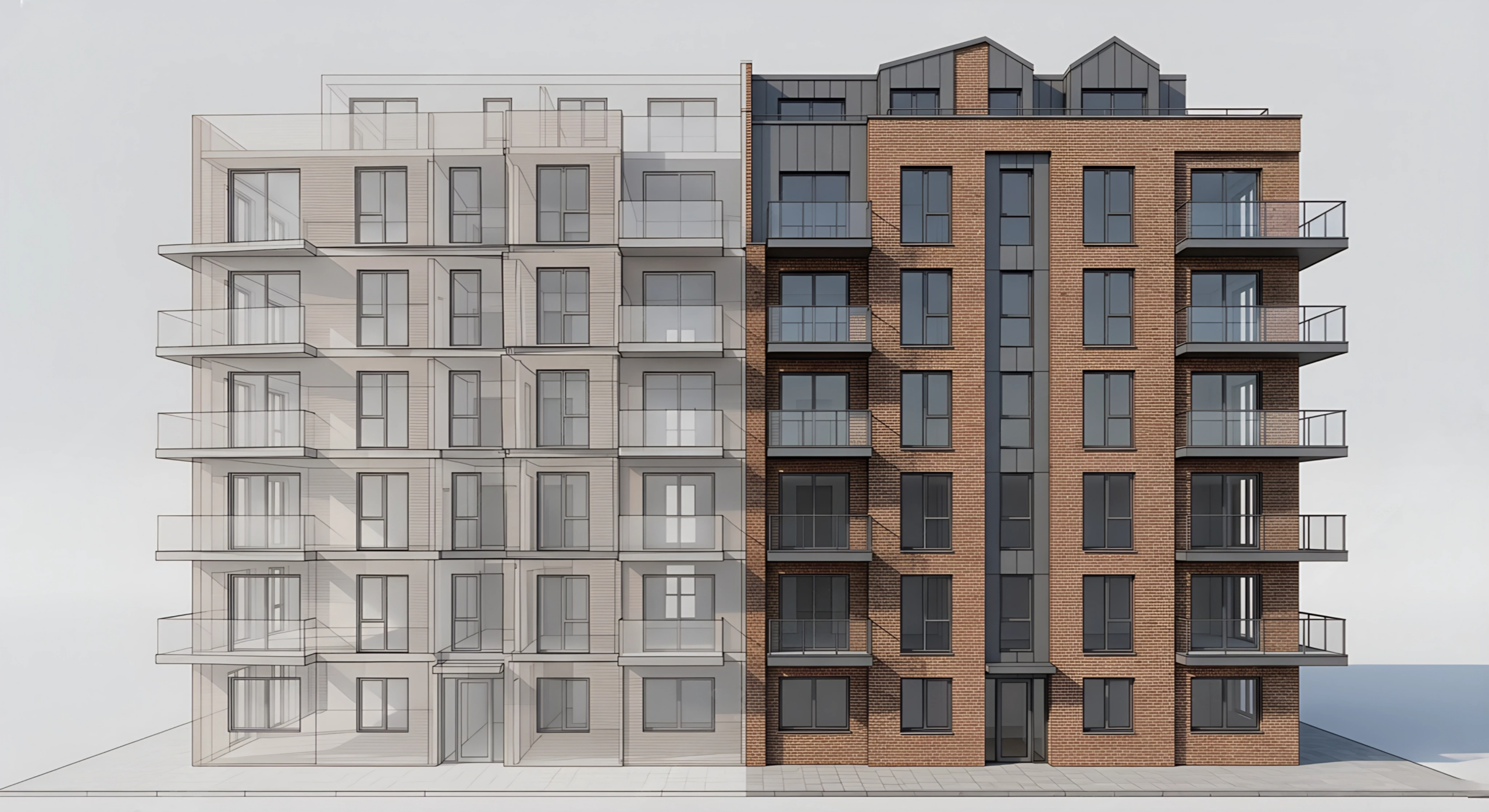
Why Conserve Solutions
We don’t just produce drawings – we fix the model that produces them. Where a standard outsourcing provider would take the brief, draft a set of 2D plans, and hand them back as flat files, we restructure the Revit model itself so every output – plans, sections, elevations, schedules – is generated from one reliable source. The practice doesn’t just get a planning package; they get a model they can keep working from.
Client Outcome
“We were weeks behind and the model was unusable for anything beyond basic floor plans. Conserve restructured it, and within days we had a complete planning package and a Revit model our team could actually continue working in.”
– Associate Director, Birmingham Architecture Practice

Quick Links
Copyrights © 2026. Conserve Solutions. All Rights Reserved.
BIM Data, Cost & Handover Services
BIM Coordination & Constructability
BIM Modelling & Digital Delivery
Discipline BIM Modeling (Architectural, Structural, MEP)
BIM Automation & Digital Engineering
BIM Data, Cost & Handover Services
Structural & Steel Detailing Services
Architectural Design, Visualization & Presentation Support
BIM Coordination & Constructability
BIM Modelling & Digital Delivery