- Inspire
- Innovate
- Integrate

- Home
- Case Studies
- Federated BIM Coordination across 5 Disciplines on a London Office Tower – How We Made the Model Construction-Ready
Federated BIM Coordination across 5 Disciplines on a London Office Tower – How We Made the Model Construction-Ready
Project Snapshot
Parameter | Detail |
Client | Main Contractor – Commercial Office Tower |
Sector | Commercial / Multi-Discipline |
Location | London, United Kingdom |
Platform / Software | Autodesk Revit, Navisworks Manage, Autodesk Docs (CDE), Conserve Box (Proprietary) |
Standards | BS EN ISO 19650, UK BIM Framework, RIBA Stages 4–5 |
Disciplines | Architecture, Structural, MEP, Facade, Vertical Transportation |
Service | Federated Model Coordination, Clash Detection & Resolution Management, CDE Setup, Discipline Sign-Off |
Key Outcome | Construction-ready federated model – zero critical clashes, all 5 disciplines signed off |
Problem Statement
Five design teams. Five models. Zero coordination. The main contractor on a London office tower had received model submissions from every discipline – architecture, structural, MEP, facade, and vertical transportation – and expected a coordinated set ready for construction packages. What they actually received was five standalone IFC files, each developed in isolation, to different levels of detail, on different timelines, with no shared data environment and no federated review at any stage. The combined model was full of hard clashes: duct routes cutting through structural beams, facade brackets conflicting with MEP risers, lift shaft clearances breached by service runs. No resolution log. No sign-off from any discipline. No single party owning the coordination. The contractor could not issue a single construction package.
Impact of Challenges
- Construction packages on hold – The contractor could not issue work packages to any trade. Without a coordinated model, every package carried the risk of on-site clashes, variations, and rework.
- No coordination owner – Five consultants, five models, and no single party responsible for federating, reviewing, or resolving. Each discipline assumed someone else was managing the interfaces.
- Clashes across every discipline pairing – Architecture vs structure, MEP vs facade, services vs vertical transportation – hard clashes existed across all combinations with no severity classification and no resolution path.
- No common data environment – Models were exchanged via email and file shares with no version control, no submission protocol, and no audit trail. The contractor had no way of knowing which model version was current.
- Cost exposure – Every unresolved clash that reaches site becomes a variation order, a programme delay, and a cost. On a London commercial tower, the cumulative exposure from uncoordinated construction was significant and entirely avoidable.

Conserve Solutions - How We Solved It
a. Thinking (Strategy)
On a multi-discipline tower, clashes between systems are expected – that’s not the failure. The failure is when nobody owns the resolution. Every consultant was modelling correctly within their own scope; the gap was at the interfaces. We proposed stepping in as the independent coordination authority – not to redesign any discipline’s work, but to establish and enforce the coordination framework: set the submission rules, build the federated model, run structured coordination rounds, assign every clash to the responsible party with a deadline, and refuse to sign off until the model was genuinely construction-ready. A fixed programme with accountability at every stage.
b. Execution (What We Built)
Established the Common Data Environment on Autodesk Docs – defined model submission standards including file naming conventions, shared coordinates, LOD requirements, and a fixed weekly submission cycle. Federated all five discipline models in Navisworks and ran clash detection across every discipline pairing – 10 unique combinations across the 5 disciplines. Classified every clash by severity: critical, major, and minor. Each clash was assigned to the responsible discipline with clear resolution instructions and a deadline. Weekly coordination rounds followed a strict cycle: disciplines submitted updated models, we re-ran detection, compared results against the previous round, confirmed resolved clashes, flagged new ones, and escalated anything overdue. Conserve Box managed the clash queue across the volume – tracking assignments, deadlines, and resolution status across disciplines and coordination cycles, so nothing fell through the gaps.
c. Integration (Impact Layer)
Drove the model through iterative coordination rounds until zero critical and zero major clashes remained. Every clash carried a full audit trail – logged, assigned, resolved, and signed off by the responsible discipline. The main contractor received a construction-ready federated model with sign-off from all five consultants, a complete clash resolution log for their records, and a CDE structure with submission protocols they could maintain through the construction phase. Construction packages were issued on programme.
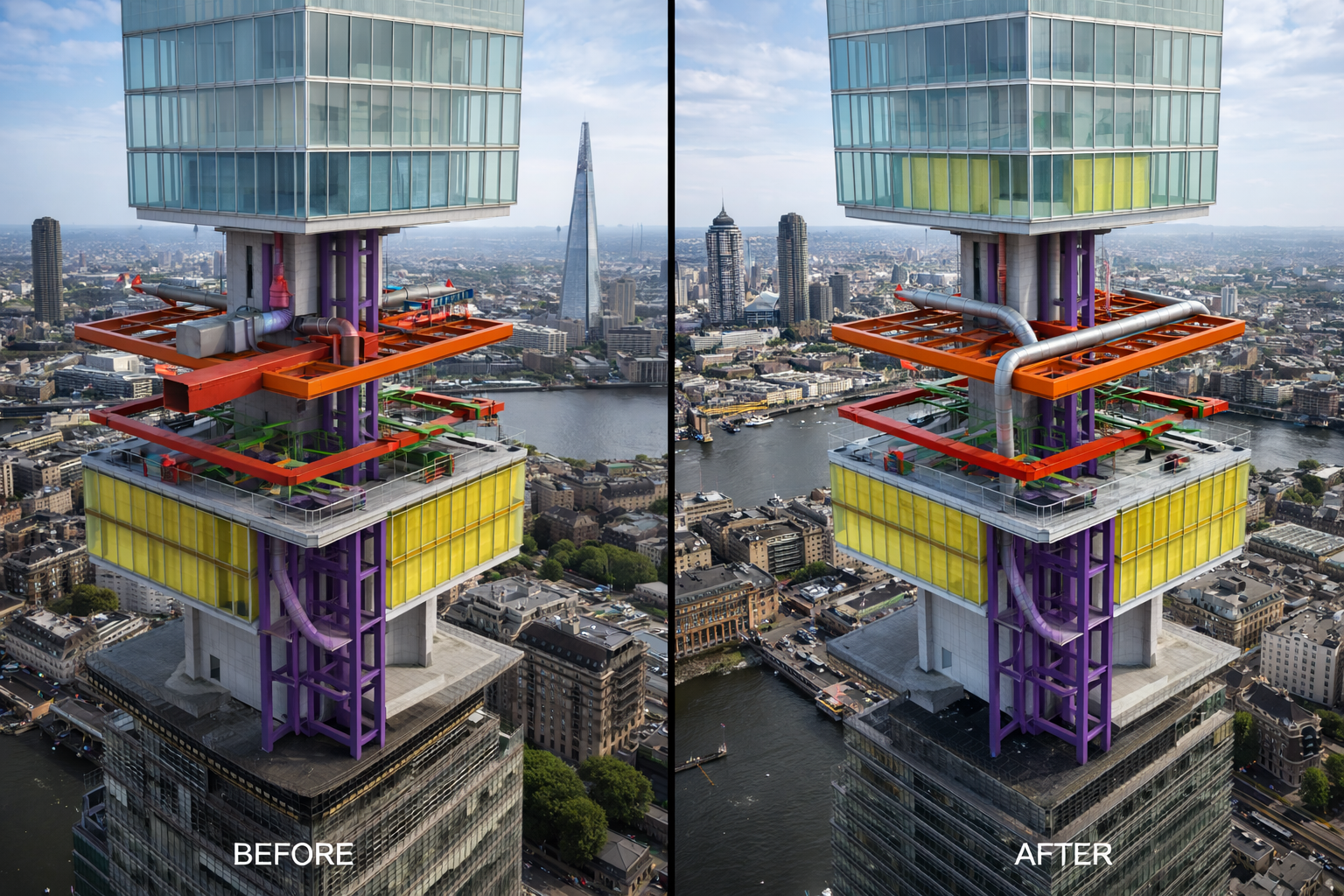
Before vs After Automation (High Impact Section)
Metric | Before | After | Improvement |
Model Status | 5 uncoordinated standalone IFC files | Single federated construction-ready model | Fully coordinated |
Clash Status | Hard clashes across all discipline pairings | Zero critical / zero major clashes | Construction-ready |
Coordination Owner | No single party responsible | Conserve as independent coordination authority | Clear accountability |
Discipline Sign-Off | None – no review process existed | All 5 disciplines signed off with audit trail | Full sign-off |
Construction Packages | Could not be issued | Issued on programme from coordinated model | Programme recovered |
Data Environment | No CDE – email/file share exchange | Autodesk Docs with submission protocols | Version-controlled |
Why Conserve Solutions
Running clash detection is straightforward – any BIM coordinator with Navisworks can generate a clash report. The hard part is closing them out. On a multi-discipline project, that means someone has to own the process: set the submission rules, enforce the deadlines, hold each discipline accountable for their clashes, track resolution across every coordination round, and refuse to sign off until the model is genuinely ready for construction. That’s the role we fill. We don’t just detect clashes – we drive them to resolution.
Client Outcome
“We had five consultants and five models, but no one was coordinating the interfaces. Conserve took ownership of the process – set the rules, ran the rounds, and held every discipline to account. We went from an unusable IFC set to a signed-off, construction-ready model. Our packages went out on programme.”
– Project Director, Main Contractor, London

Quick Links
Copyrights © 2026. Conserve Solutions. All Rights Reserved.
BIM Data, Cost & Handover Services
BIM Coordination & Constructability
BIM Modelling & Digital Delivery
Discipline BIM Modeling (Architectural, Structural, MEP)
BIM Automation & Digital Engineering
BIM Data, Cost & Handover Services
Structural & Steel Detailing Services
Architectural Design, Visualization & Presentation Support
BIM Coordination & Constructability
BIM Modelling & Digital Delivery