- Inspire
- Innovate
- Integrate

- Home
- Case Studies
- Structural BIM and Shop Drawing Extraction for a Steel-Frame Industrial Facility in Leeds – Delivered in 6 Weeks
Structural BIM and Shop Drawing Extraction for a Steel-Frame Industrial Facility in Leeds – Delivered in 6 Weeks
Project Snapshot
Parameter | Detail |
Client | Steel Fabricator – Industrial Warehouse & Distribution Facility |
Sector | Industrial / Steel Construction |
Location | Leeds, United Kingdom |
Platform / Software | Autodesk Revit, Advance Steel, AutoCAD, Autodesk Docs, Conserve Box (Proprietary) |
Standards | UK BIM Framework, BS EN 1993 (Eurocode 3), BS EN 1090 (Execution Class), DSTV Standard |
Service | Structural BIM Modelling, Steel Connection Detailing, Shop Drawing Extraction, CNC File Output |
Key Outcome | Complete fabrication package delivered in 6 weeks — steel erection started on programme |
Problem Statement
A fabrication workshop with machines ready to cut and nothing to feed them is not a scheduling gap – it’s a programme failure in the making. The steel contractor on a Leeds industrial facility had committed to an erection date, but the structural model handed over by the design consultants was a design-intent Revit file – geometry only. No connection details. No bolt or weld specifications. No secondary steelwork. No route to generate the DSTV files their CNC machines needed. The fabricator was told the model was “BIM-ready” – in reality, it was weeks of manual detailing away from producing a single shop drawing.
Impact of Challenges
- Erection programme at risk – Steel fabrication is the critical path on any industrial build. Without shop drawings, cutting cannot start. Without cutting, erection slips – and cladding, MEP, and fitout queue behind it.
- Design model mistaken for a fabrication model – The Revit model showed primary frame geometry but contained none of the fabrication intelligence a workshop needs: no connections, no secondary members, no material call-offs, no CNC-ready data.
- Specification drift – Steel grades and section sizes in the model had not been reconciled against the final structural engineer’s specification. Proceeding without an audit would have created procurement errors and site rework.
- Manual detailing timeline unacceptable – Traditional detailing from the design model would take 10–12 weeks. The fabricator’s programme allowed six.
- Cost exposure – Every week of delayed steel erection compressed the downstream programme. The cumulative cost of idle workshop capacity, delayed trades, and potential liquidated damages was significant and escalating.
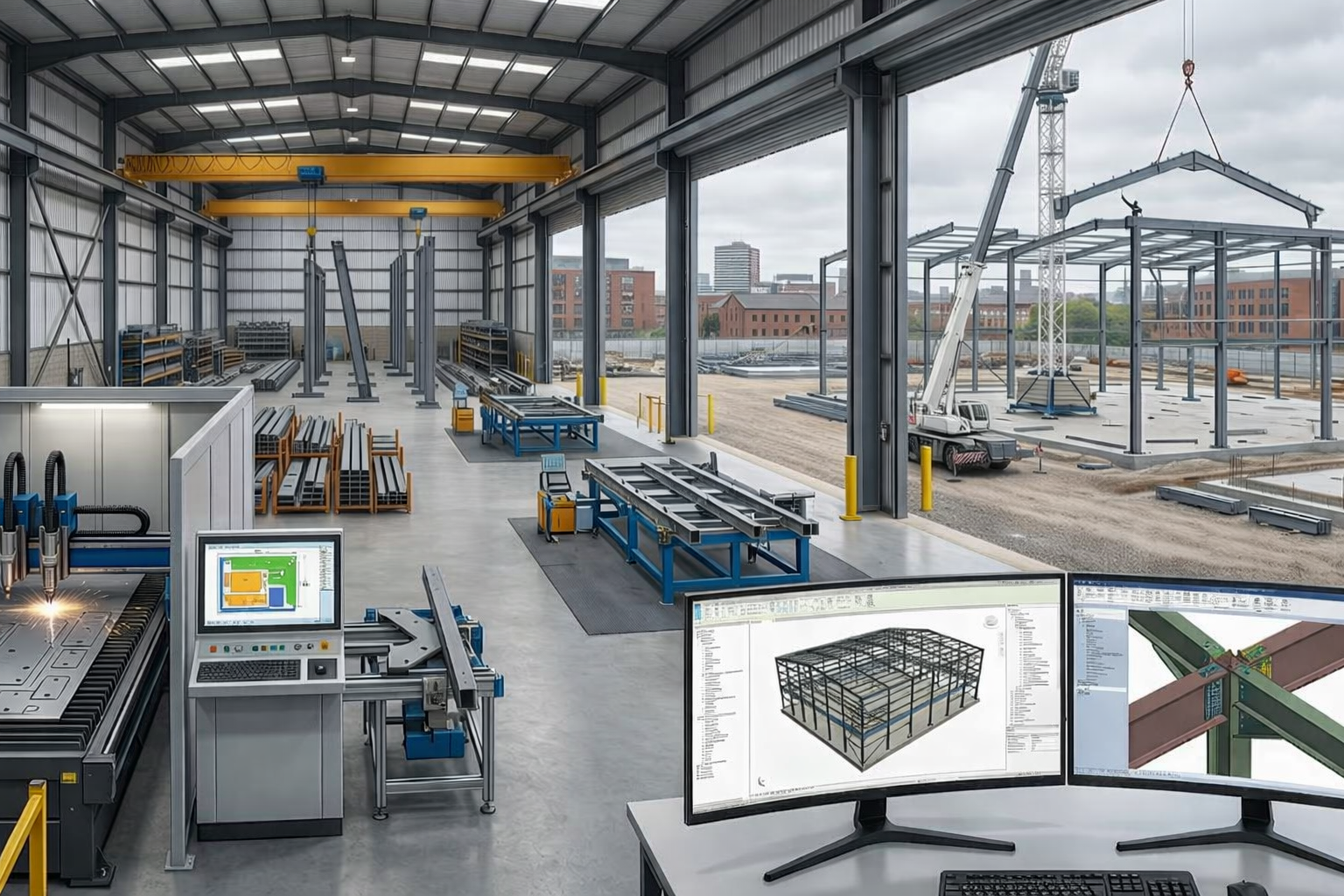
Conserve Solutions - How We Solved It
a. Thinking (Strategy)
The fabricator didn’t need more design – the engineering was done. What was missing was the translation layer between design and workshop. We proposed taking the existing Revit structural model, auditing it against the confirmed specification, upgrading it to fabrication-level detail in Advance Steel, and delivering the shop drawing package in phased batches aligned to the erection sequence – so the workshop could start cutting steel within two weeks, not twelve.
b. Execution (What We Built)
Audited the design model against the structural engineer’s specification – reconciled steel grades (S275/S355), verified section sizes, and flagged fire rating conflicts. Synchronised the corrected Revit model into Advance Steel and detailed every connection: bolted end plates, fin plates, base plates, splices, moment connections, and bracing cleats – all with full bolt schedules and weld callouts. Added secondary steelwork including purlins, side rails, girts, and bracing. Using Conserve Box, our proprietary automation tool, we queued and streamlined the connection detailing and drawing extraction workflow – allowing us to process the full fabrication package within the six-week window. The deliverables included general arrangement drawings, individual member shop drawings, assembly drawings, bills of materials, and DSTV files for CNC fabrication.
c. Integration (Impact Layer)
Structured the deliverables around the erection sequence – not the detailing sequence. Foundations and base plates went to the workshop first, then primary columns and rafters, then secondary steelwork and bracing. The fabricator started cutting in Week 2 while detailing of later phases continued in parallel. DSTV files transferred directly to CNC machines – no manual markup, no intermediary conversion. The fabricator also received a fully coordinated Advance Steel model for quantity verification, erection planning, and as-built records.
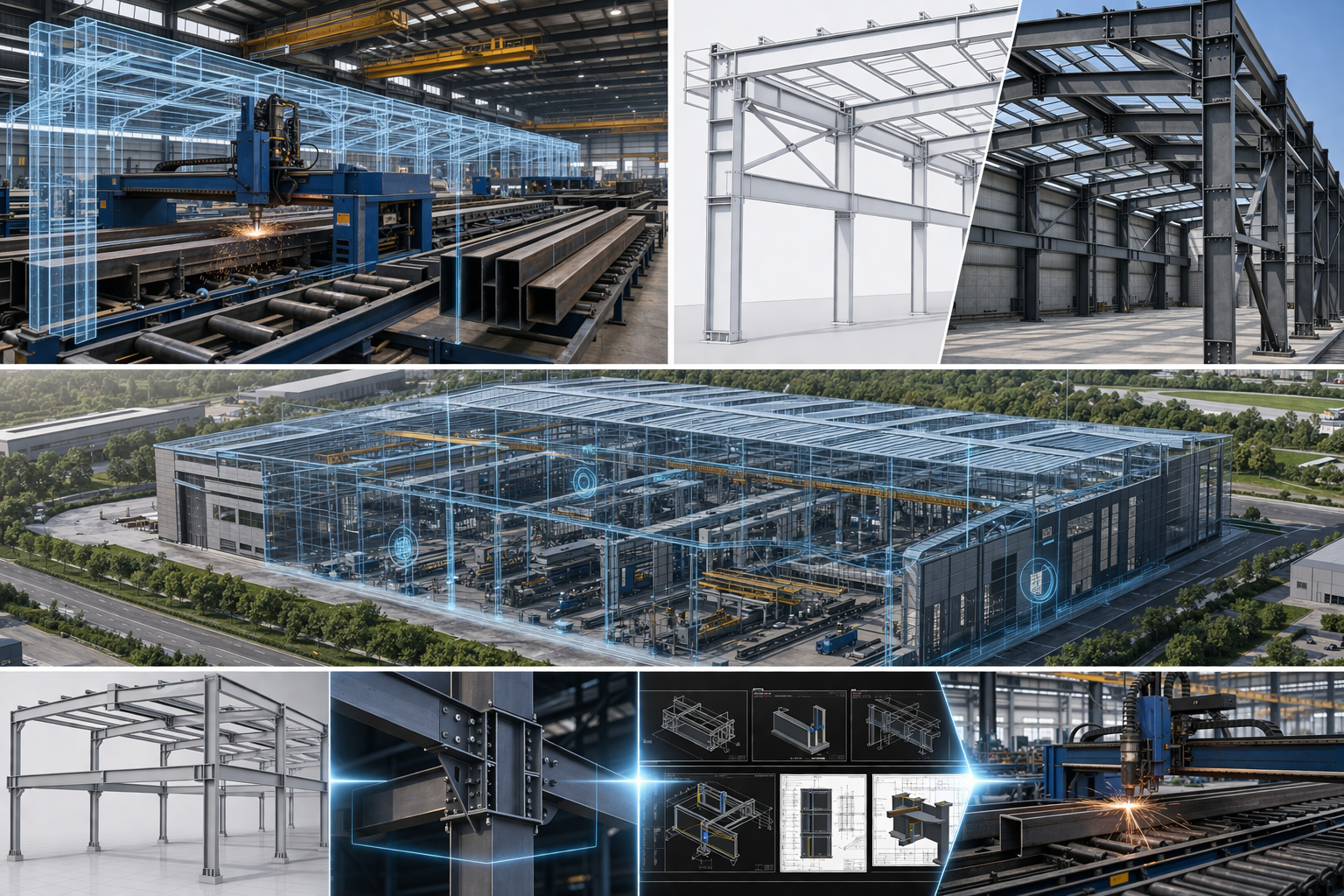
Before vs After Automation (High Impact Section)
Metric | Before | After | Improvement |
Model Status | Design-intent geometry only | Fabrication-ready – full connections & secondary steel | Workshop-ready |
Shop Drawing Output | Manual detailing – 10–12 week estimate | Full package delivered in 6 weeks | ~50% faster |
CNC Data | No DSTV output path | Direct to CNC machines from model | Zero manual translation |
Fabrication Start | Stalled – waiting on drawings | Workshop cutting from Week 2 | Programme recovered |
Spec Alignment | Model vs specification not reconciled | Audited to BS EN 1993 / BS EN 1090 | Procurement risk removed |
Erection Sequence | Drawings not phased | Delivered in erection-sequence batches | Site-ready delivery |
Why Conserve Solutions
Most detailing providers work linearly – they receive a brief, detail from start to finish, and deliver a complete package at the end. That approach doesn’t work when the programme is already under pressure. We deliver to the erection sequence, not the detailing sequence, so fabrication starts while detailing is still in progress. Our in-house Developed tool, Conserve Box, allows us to queue and accelerate the detailing workflow – which is how we compress a 10–12 week programme into six weeks without cutting corners on accuracy or standards compliance.
Client Outcome
“Our workshop was idle and the erection date wasn’t moving. Conserve phased the shop drawings around our fabrication sequence – we were cutting steel within a fortnight and the full package landed inside six weeks. The CNC files ran clean, no manual conversion needed.”
– Operations Director, Steel Fabrication Contractor, Leeds

Quick Links
Copyrights © 2026. Conserve Solutions. All Rights Reserved.
BIM Data, Cost & Handover Services
BIM Coordination & Constructability
BIM Modelling & Digital Delivery
Discipline BIM Modeling (Architectural, Structural, MEP)
BIM Automation & Digital Engineering
BIM Data, Cost & Handover Services
Structural & Steel Detailing Services
Architectural Design, Visualization & Presentation Support
BIM Coordination & Constructability
BIM Modelling & Digital Delivery