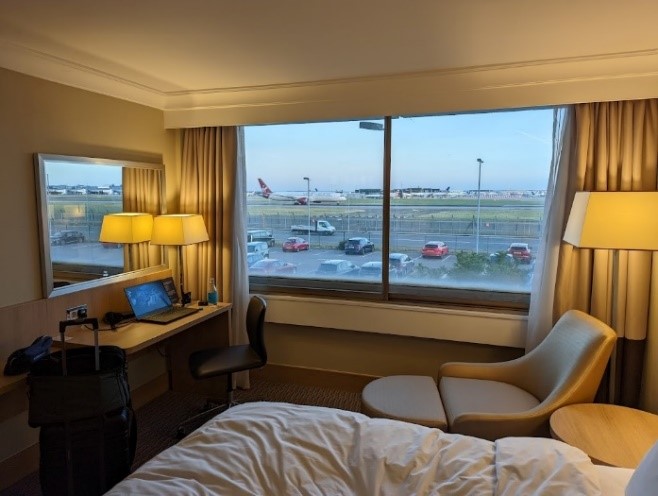
Are you tired of the unrelenting noise that infiltrates your home, office, or apartment, disturbing your peace and concentration? External noise infiltration is a growing concern in modern buildings, affecting occupant comfort, concentration, and overall well-being. Buildings such as residences, offices, and healthcare facilities are often exposed to continuous noise from traffic, aircraft, industrial activities, and Mechanical, Electrical & Plumbing (MEP) equipment located at roof or ground levels. The impact of these noise sources becomes increasingly significant, particularly in dense urban environments.
In this Blog
Key takeaways
Factors influencing the Facade Acoustic Design
Facade Acoustic Performance – How it is rated?
Conclusion
Key Takeaways
Facade design must consider acoustics
Use OITC / Rw+Ctr ratings for Facade
Methods to evaluate External Noise – Measurement / Simulation
End Goal to achieve Indoor Noise Requirements
Factors influencing the Facade Acoustic Design:
In the context of building facade acoustic design, it is essential to familiarize with key acoustic parameters that influence design decisions.
Facade External Noise Exposure:
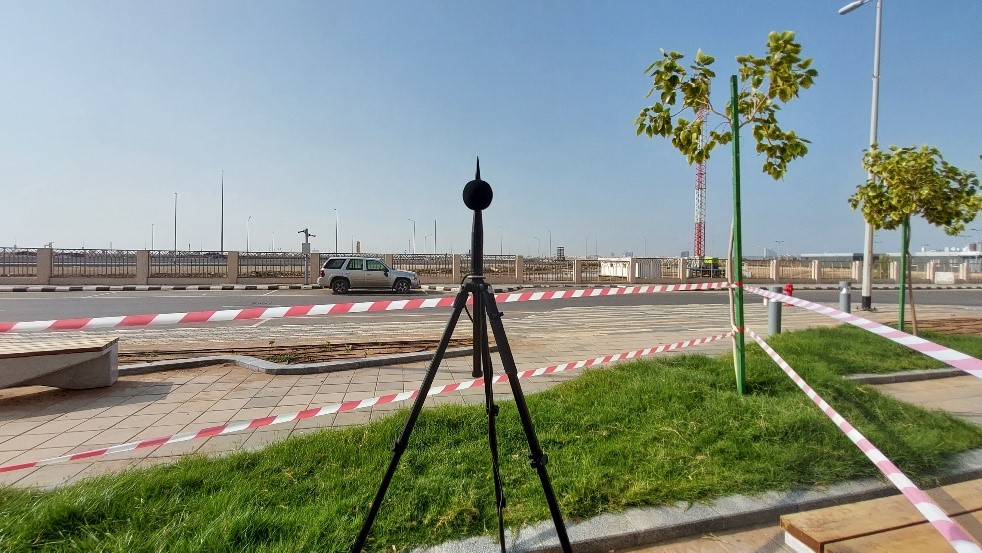
External noise is influenced by surrounding noise sources, and it is essential to evaluate noise levels at different locations, directions, and heights around a building. The following methods are commonly used to evaluate the External Noise Levels:
This involves measuring and recording noise levels at multiple locations around the site over a defined period. It captures variations in noise throughout the day or week and helps determine existing noise characteristics.
For projects near dominant sources such as airports, industrial plants, or high-traffic zones, focused measurements provide more accurate data.
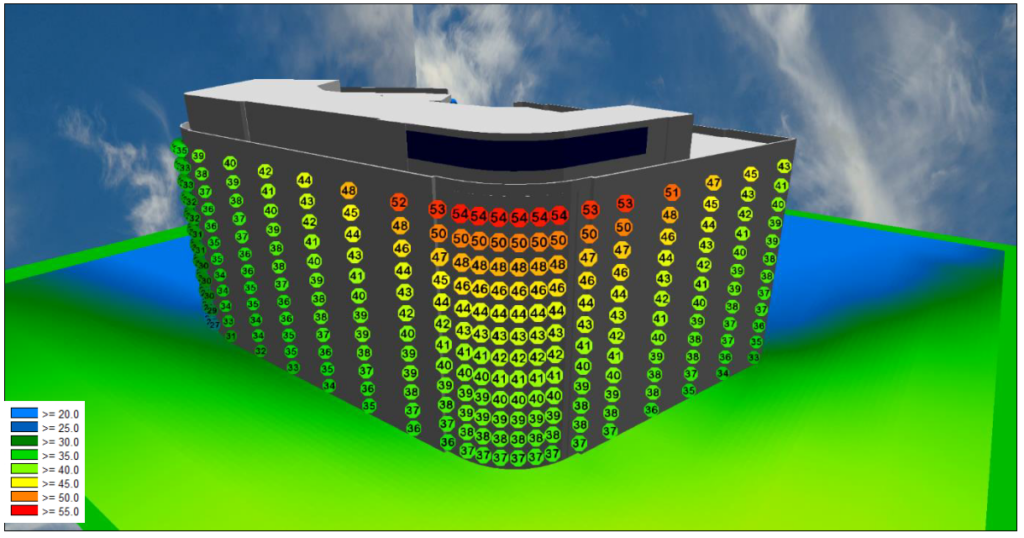
Method 2: Environmental Noise Simulation:
When physical monitoring is not feasible (e.g., during future development stages), environmental noise simulation involves using computer models to predict noise levels at various locations based on factors like the building’s design, surrounding environment, and distance from noise sources. This technique involves creating visual representations (maps) of noise levels in and around the building. Noise maps help identify areas with higher noise exposure at the different direction and levels of an, enabling targeted mitigation plan for the facade design.
All relevant scenarios from the master plan, along with design inputs, are incorporated into the model to ensure accurate and realistic predictions.
Indoor Noise Requirement (NC / dBA ratings):
The selection of the appropriate sound insulation rating for a facade system is influenced by both external noise conditions and the specific requirements of different indoor spaces, such as open offices and bedrooms. Therefore, it is essential to precisely determine the desired indoor noise levels (NC / dBA ratings) and create a facade design that incorporates sound insulation features tailored to meet these diverse needs.
Facade Acoustic Performance – How it is rated?
Sound insulation is typically expressed using:
STC (Sound Transmission Class) – American standards
However, standard ratings such as STC or Rw do not adequately account for low-frequency noise. This is a concern because noise from sources such as road traffic and aircraft has a significant contribution in the lower frequency range. Therefore, these ratings alone may not be sufficient when defining facade sound insulation criteria.
To overcome this limitation, facade performance is evaluated using:
OITC (Outdoor-Indoor Transmission Class)
Rw + Ctr
These parameters provide a more accurate assessment of facade performance against real-world external noise conditions, particularly at low frequencies.
Conclusion
Evaluating noise mitigation measures during early design stages can reduce the need for extensive facade systems, as some noise can be controlled at the source or during propagation. This approach supports the development of sustainable facade solutions and contributes to cost optimization.
Additionally, proper acoustic treatment of facade elements such as mullions, transoms, and slab connections is essential to prevent noise leakage into interior spaces. The selection of glazing systems with appropriate OITC values, combined with careful detailing, ensures effective noise control.
Overall, a well-designed acoustic facade enhances indoor comfort, improves occupant satisfaction, and contributes to better building performance.
Is Acoustic Comfort a Challenge on Your Current Project?
Conserve Solution provides acoustic design support for facades, interiors, and sensitive spaces – from noise control analysis to practical, buildable solutions that improve speech privacy and occupant comfort.
An Emerging International Business Developer in the AEC Industry. Shankar is a Mechanical Engineer from India with a specialization in Mobility Engineering from the esteemed Politecnico di Milano University, Milan, Italy. Shankar is dedicated on exploring business opportunities in the Built Environment / BIM. He focuses on International Business Development Operations globally. He supports Team Conserve by Introducing New Client, Project Collaborations, Brand Awareness, New technology tool integrations and New Portfolio Creations.