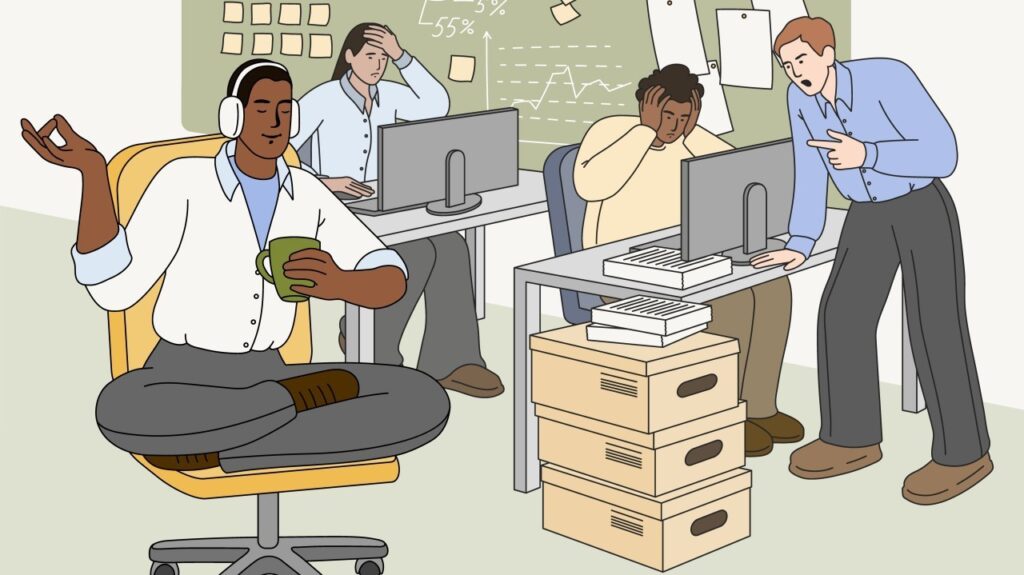


The widespread adoption of open office layouts has transformed contemporary workplaces by promoting collaboration, flexibility, and efficient space utilization. However, alongside these benefits, open offices have introduced significant acoustic challenges, with reverberation time (RT) emerging as a critical yet often overlooked factor. Reverberation time describes the persistence of sound within a space after the source has ceased and plays a decisive role in determining speech clarity, noise propagation, and overall acoustic comfort. In open office environments, excessive RT allows speech sounds to travel over long distances and remain audible for extended periods, leading to increased distraction and reduced concentration.
Unlike enclosed offices, open-plan workspaces lack physical barriers that naturally limit sound reflections, resulting in complex sound fields dominated by reflected speech. Poor control of RT intensifies overlapping conversations, amplifies background noise, and increases the cognitive effort required to maintain focus. Prolonged exposure to such acoustic conditions contributes to mental fatigue, heightened stress levels, and a diminished sense of acoustic privacy among occupants. Consequently, reverberation time in open offices is not merely an acoustic parameter but a key determinant of employee well-being, productivity, and psychological comfort.
This article examines the role of reverberation time in open office environments, highlighting its influence on speech intelligibility, cognitive performance, and perceived privacy. By understanding and controlling RT, open office design can better balance collaboration with concentration, creating workplaces that are both functional and acoustically comfortable.
In open office environments, inadequate control of reverberation time (RT) creates persistent acoustic conditions that adversely affect occupant performance and well-being. Excessive reverberation amplifies overlapping speech, intensifying the cocktail party effect and increasing cognitive load as occupants continuously filter unwanted auditory information. This ongoing exposure acts as an invisible stressor, contributing to elevated cortisol levels and mental fatigue. Prolonged sound persistence also compromises acoustic privacy, leading to loss of privacy trust and heightened social anxiety. The resulting disruption of concentration prevents sustained focus and flow states, while increased vocal effort driven by the Lombard effect further escalates background noise. Over time, these combined effects result in listener fatigue and sensory overload, even when overall sound levels appear moderate. Despite these impacts, reverberation time remains insufficiently addressed in the design and evaluation of open office environments.
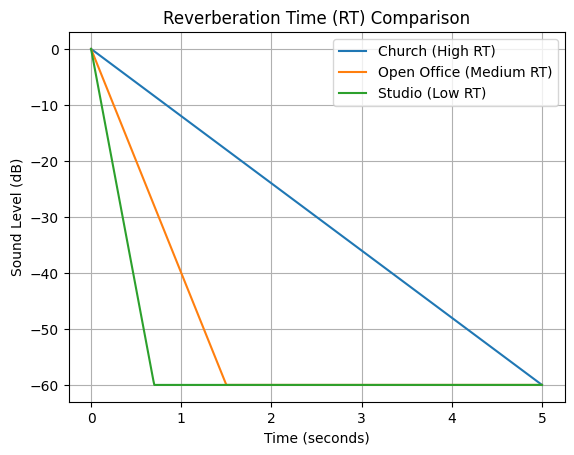
Reverberation Time (RT) is the time it takes for sound to decay by 60 dB after the sound source has stopped.
When you clap in a room, the sound doesn’t stop instantly, it lingers due to reflections. RT measures how long that lingering sound lasts.
Some if the examples are
Comparison of sound decay curves representing different reverberation times. Spaces like churches exhibit slow decay (high RT), while offices and studios show faster decay, indicating better acoustic control.
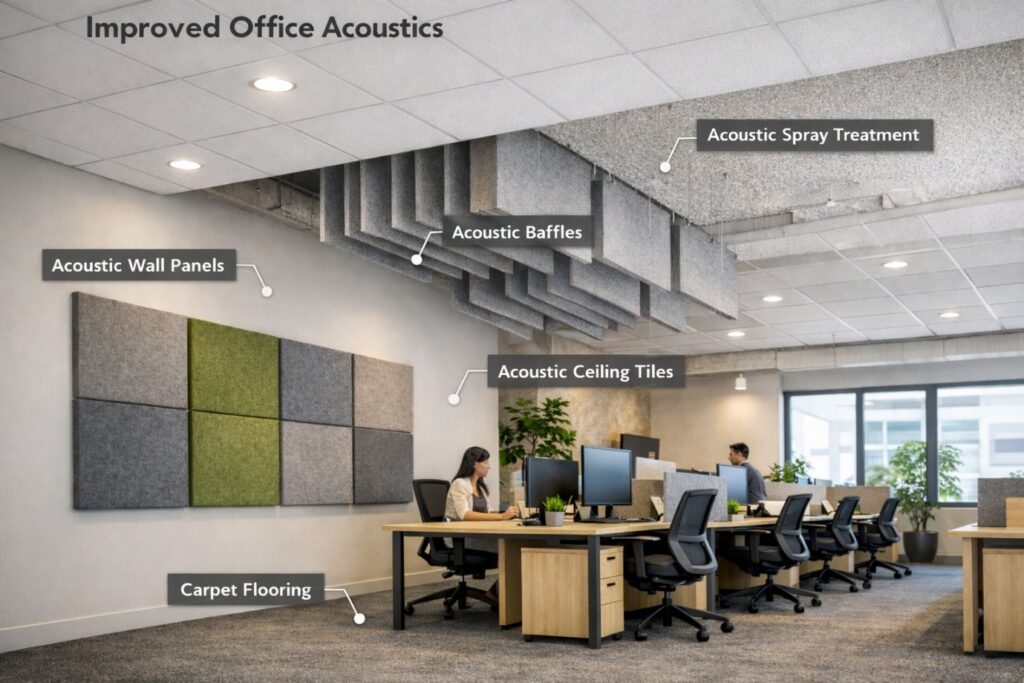
Preventing excessive reverberation time in open office environments requires a balanced integration of acoustic materials and spatial planning strategies. The most effective measure is the incorporation of sound-absorbing ceiling systems, as ceilings provide the largest continuous surface for controlling sound reflections. Acoustic ceiling tiles, baffles, or suspended absorptive elements significantly reduce sound persistence and limit the spread of speech across open workspaces. Complementary wall-mounted absorptive panels further reduce lateral reflections, particularly when positioned near collaborative zones, circulation paths, and high-speech activity areas.
Open office environments typically include highly reflective materials such as:
These materials reflect sound waves instead of absorbing them, significantly increasing reverberation time if not treated with acoustic finishes.
Material selection and interior finishes play a crucial role in RT control. Open offices often rely heavily on reflective surfaces such as glass, concrete, and metal, which increase reverberation if left untreated. Introducing soft, absorptive materials—including carpets, upholstered furniture, acoustic screens, and fabric panels—helps balance reflective surfaces and improves absorption in the mid-frequency range most relevant to speech. Partial-height partitions and acoustic dividers can also interrupt sound paths while preserving visual openness, thereby reducing speech propagation without compromising spatial transparency.
In addition to physical treatments, effective acoustic performance depends on informed design decisions and performance evaluation. Zoning strategies that separate quiet work areas from collaborative spaces reduce the accumulation of reverberant speech in focus zones. Predictive acoustic modelling during the design phase, followed by on-site RT measurements after installation, ensures that recommended RT values for open offices typically between 0.4 s and 0.8 s are achieved. Together, these preventive measures help mitigate cognitive overload, improve speech clarity, and create acoustically supportive open office environments.
Reverberation time (RT) is evaluated using standards such as ISO 3382 and guidelines from ASHRAE, which define measurement methods and recommended acoustic conditions. For open office environments, these standards suggest an optimal RT range of 0.4 s to 0.8 s to ensure speech clarity, reduce noise distractions, and improve overall acoustic comfort. These standards also specify measurement techniques such as decay-based methods (T20, T30) and emphasize frequency-based evaluation, particularly in the mid-frequency range critical for speech intelligibility. They serve as essential references for both acoustic simulation and real-time performance assessment in building design.
Reverberation time (RT) can be calculated using different methods depending on the space and accuracy required:
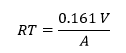
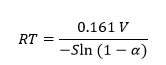
This method uses mathematical formulas to estimate reverberation time.
Sabine Formula
Eyring Formula
This method uses 3D modelling and simulation software to analyse sound behaviour.
Common 3D Acoustic Software
Includes concepts like:
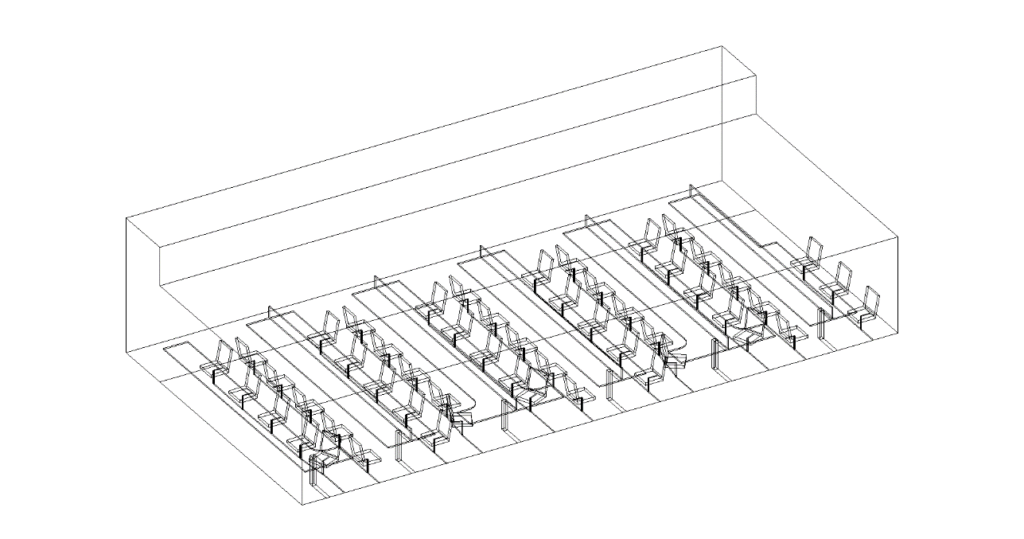
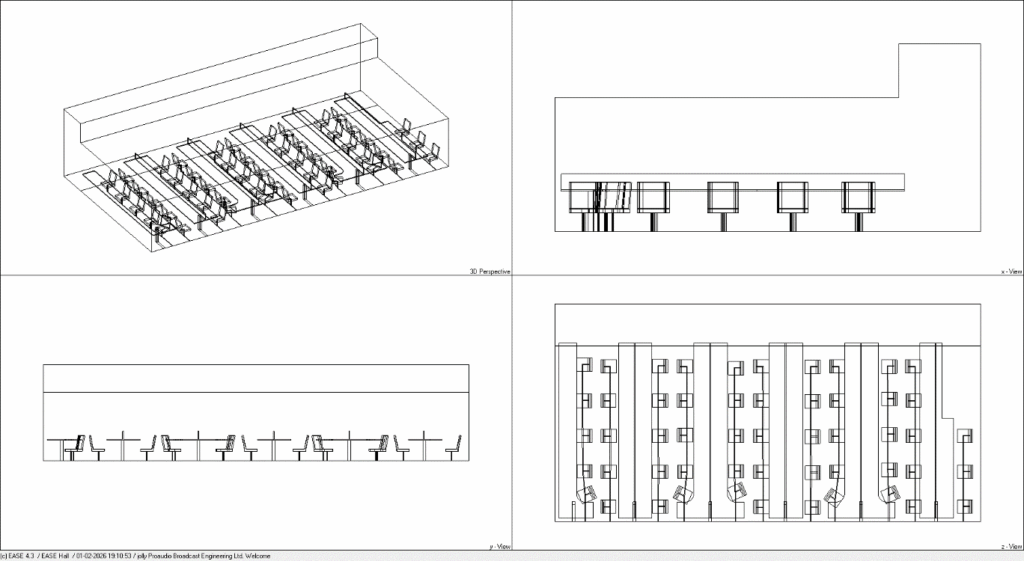
The architectural drawings of the open office were imported into EASE in the form of polylines, which served as the basis for generating a three-dimensional geometric model of the space. These polylines were used to accurately define the room boundaries, ceiling height, and overall spatial configuration in accordance with the architectural layout. The resulting 3D model ensured a realistic representation of the open office environment, enabling precise simulation of sound propagation and reflection within the space.
Reverberation time (RT) optimization was conducted within the EASE simulation environment by assigning frequency-dependent sound absorption coefficients to all interior surfaces, including ceilings, walls, floors, partitions, and major furnishings. The absorption values were selected based on the proposed interior finishes and manufacturer-provided acoustic data. Using the defined geometry and material properties, acoustic simulations were performed across standard octave frequency bands relevant to speech. The calculated RT values were then analysed and compared with recommended criteria for open office environments, allowing for iterative modification of surface treatments and material selections. This process enabled effective evaluation and optimization of the reverberation characteristics of the open office space prior to physical implementation.
Figure 1 – Open Office Modelling using Ease
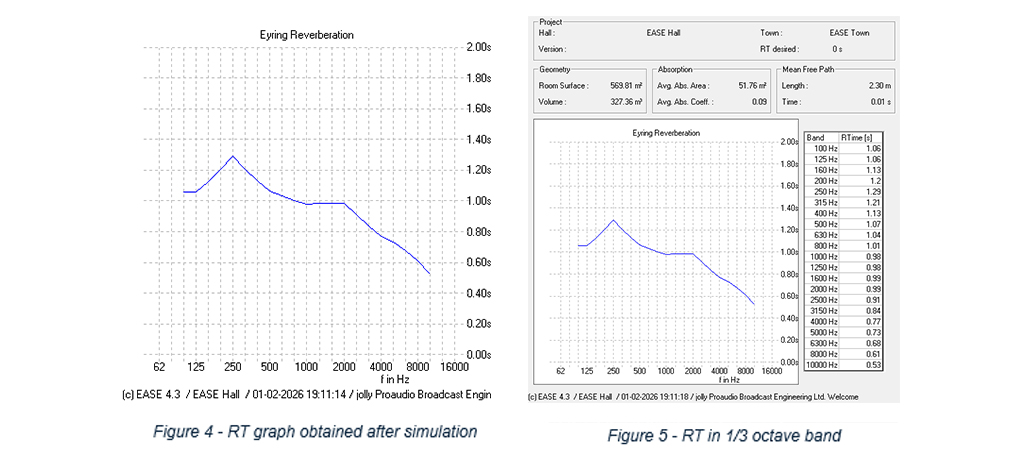
The reverberation time (RT) of the open office space was calculated using EASE based on the defined room geometry and assigned acoustic properties. The three-dimensional model, generated from architectural polylines, consisted of a total room surface area of 569.81 m² and an enclosed volume of 327.36 m³. These geometric parameters formed the fundamental inputs for the reverberation time computation within the software.
Frequency-dependent sound absorption coefficients were assigned to all interior surfaces, including the ceiling, walls, floor, and furnishings, based on the proposed interior finishes. From these inputs, EASE calculated the equivalent absorption area, resulting in an average absorption area of 51.76 m² and an average absorption coefficient of 0.09. Using these values, the software internally applies room acoustic theory consistent with the Sabine-based approach, where reverberation time is proportional to room volume and inversely proportional to total sound absorption.
The reverberation time was computed across standard octave and one-third octave frequency bands ranging from 100 Hz to 10,000 Hz. The calculated RT values indicate higher reverberation at low frequencies, with values of approximately 1.06 s at 100–125 Hz, increasing to a peak of about 1.29 s at 250 Hz. In the mid-frequency range, which is critical for speech intelligibility, RT values remain close to 1.0–1.1 s. A gradual reduction in RT is observed at higher frequencies, decreasing to 0.53 s at 10,000 Hz, reflecting the increased effectiveness of absorptive materials at higher frequencies.
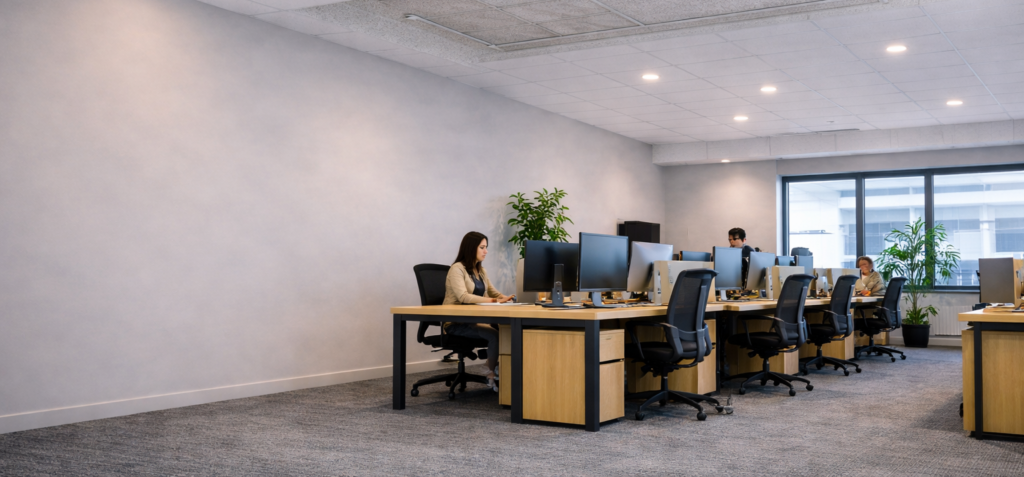
The acoustic model incorporates typical interior finishes to represent realistic conditions within the open office space. The ceiling consists of painted gypsum board, providing limited sound absorption. The walls are finished with paint, contributing to reflective acoustic behavior. The floor is covered with carpet, which offers moderate sound absorption and helps reduce reverberation. The doors are made of glass, acting as highly reflective surfaces.
The frequency-dependent RT curve generated by EASE demonstrates the acoustic behavior of the open office space and highlights the imbalance between low- and high-frequency absorption. These calculated results were used to evaluate the effectiveness of the applied materials and to identify the need for additional mid- and low-frequency absorption in order to achieve recommended RT values for open office environments. This calculation-based assessment enabled informed optimization of the acoustic design prior to physical implementation.
The acoustic model incorporates typical interior finishes to represent realistic conditions within the open office space. The ceiling consists of painted gypsum board, providing limited sound absorption. The walls are finished with paint, contributing to reflective acoustic behavior. The floor is covered with carpet, which offers moderate sound absorption and helps reduce reverberation. Absorption Data for the Finishes for the different elements considered are tabulated below.
Element | Absorption Coefficient (α) at 1/1 Octave band Frequencies (Hz) | ||||||
Type | Finish Description | 125 | 250 | 500 | 1000 | 2000 | 4000 |
Wall | Paint | 0.02 | 0.02 | 0.02 | 0.02 | 0.02 | 0.02 |
Ceiling | Gypsum | 0.14 | 0.1 | 0.06 | 0.05 | 0.04 | 0.04 |
Paint | 0.02 | 0.02 | 0.02 | 0.02 | 0.02 | 0.02 | |
Floor | Carpet | 0.09 | 0.08 | 0.21 | 0.26 | 0.27 | 0.37 |
Table 1: Sound absorption data’s
Figure 2 – Actual finishers implemented in an open office
Figure 3 – Simulation of the Model using Ease
Author

Thrisha R is a Mechanical Engineer with a Bachelor’s degree in Mechanical Engineering and a postgraduate qualification. She currently works as a Junior Executive Engineer and brings over two years of experience in the field of acoustics. Her expertise includes room acoustics, architectural acoustics, and building services. She is focused on delivering practical, efficient, and high-quality acoustic solutions across a range of project environments.
Copyrights © 2026. Conserve Solutions. All Rights Reserved.
BIM Data, Cost & Handover Services
BIM Coordination & Constructability
BIM Modelling & Digital Delivery
BIM Automation & Digital Engineering
BIM Data, Cost & Handover Services
Structural & Steel Detailing Services
Architectural Design, Visualization & Presentation Support
BIM Coordination & Constructability
BIM Modelling & Digital Delivery