Speech privacy is a critical requirement in modern offices and healthcare environments, where confidential communication frequently takes place. While architectural acoustic designs often meet standard criteria on paper, real-world performance can differ significantly due to overlooked sound transmission paths. One such major contributor is HVAC crosstalk – sound travelling through shared duct systems between adjacent spaces.
This article focuses on one such critical aspect – HVAC-related sound transmission and its impact on speech privacy. It further explores targeted engineering solutions that address these challenges through an integrated approach, ensuring that both architectural and mechanical systems contribute effectively to the overall acoustic performance.
In this Blog
Introduction
Key Takeaways
Understanding HVAC Crosstalk
Passive HVAC Acoustic Strategies
Crosstalk Attenuators (CTA)
Design Methodology
Conclusion
Key Takeaways
Flanking path impact
Passive control limitations
CTA improves privacy
Design coordination required
Field validation essential
Understanding HVAC Crosstalk
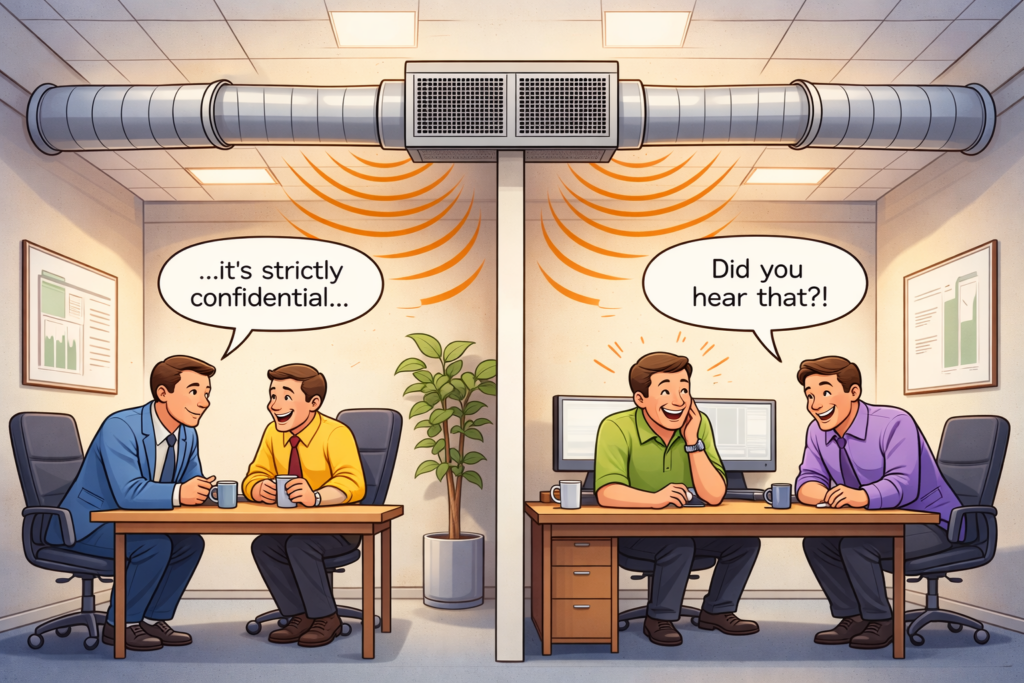
A common issue in offices and healthcare facilities is inadequate speech privacy between adjacent spaces, even when acoustic requirements appear satisfied. Typically, rooms are separated by walls meeting required ratings, with sealed doors and treated ceilings. However, conversations are still audible in neighboring spaces.
This issue is frequently observed in environments such as:
Open-plan offices with meeting rooms
Consultation rooms adjacent to corridors
Patient rooms near nurses’ stations
Therapy and counselling spaces
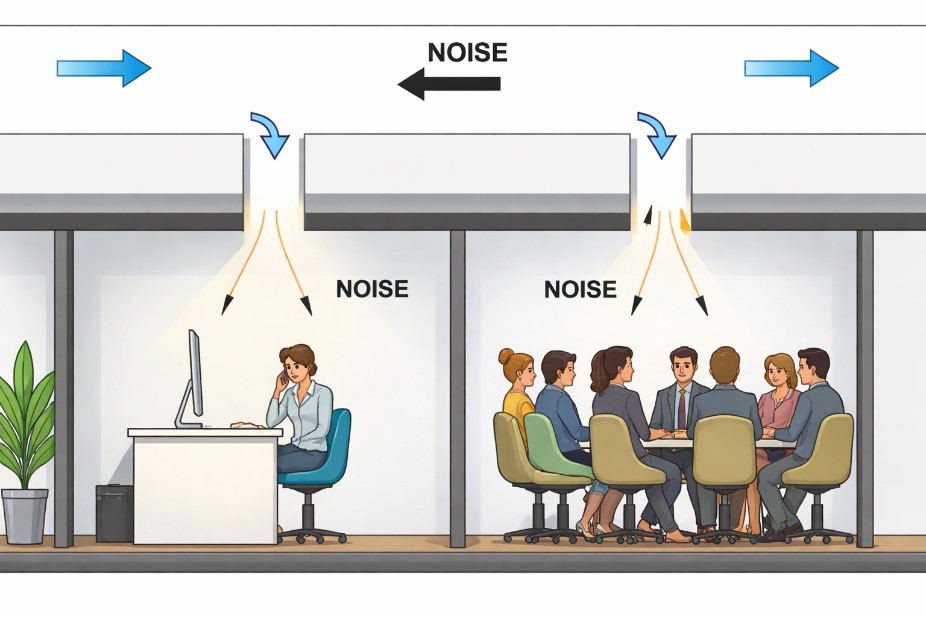
In laboratory testing, sound insulation performance is measured under highly controlled environments where assemblies are fully sealed and flanking transmission paths are minimized. In contrast, real-world conditions include multiple indirect sound paths, known as flanking paths, which significantly influence overall acoustic performance.
Among these, HVAC-related flanking transmission – specifically crosstalk through ducts connecting adjacent rooms – is a major contributor. Even when ducts are internally lined and sound attenuators are installed near air handling units, sound can still propagate through shared ductwork between spaces. This results in unintended sound transmission, allowing speech to travel from one room to another and thereby compromising privacy.
Preventive Measures
1 HVAC Acoustic Controls
Before introducing specialized solutions such as crosstalk attenuators, it is important to consider fundamental HVAC design strategies that can help reduce sound transmission through ductwork. These passive measures are often the first line of defense against HVAC-related crosstalk and, when properly implemented, can significantly improve speech privacy.
1.1 Use of Duct Elbows
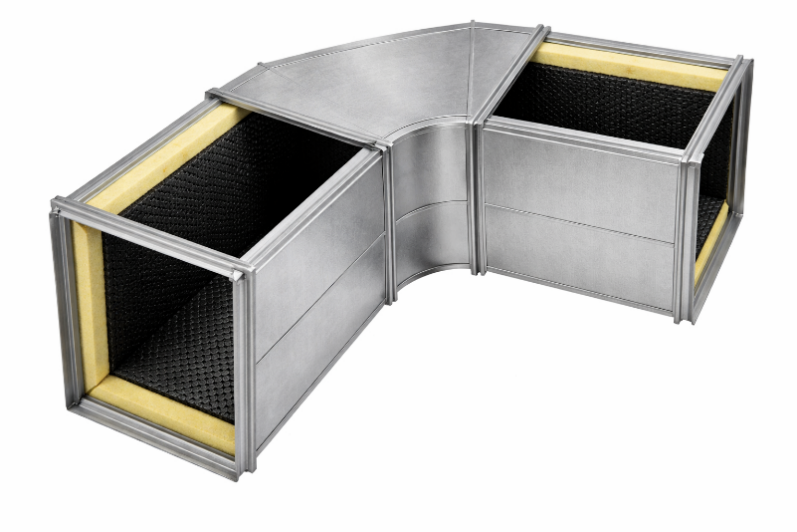
Introducing bends in ductwork disrupts the direct path of sound propagation, increasing attenuation through reflections and scattering.
1.2 Acoustic Duct Lining
Internal lining using sound-absorbing materials reduces sound reflection and attenuates mid-to-high frequency noise, particularly in the speech range (500–4000 Hz).
1.3 Increased Duct Path Length
Longer duct paths introduce additional attenuation through friction, reflections, and interaction with lined surfaces.
1.4 Limitations of Passive Measures
These methods may not be sufficient in high privacy environments due to:
Space constraints
Limited lining thickness
Insufficient attenuation
In such cases, targeted solutions like Crosstalk Attenuators are required.
2 Crosstalk Attenuators (CTA)
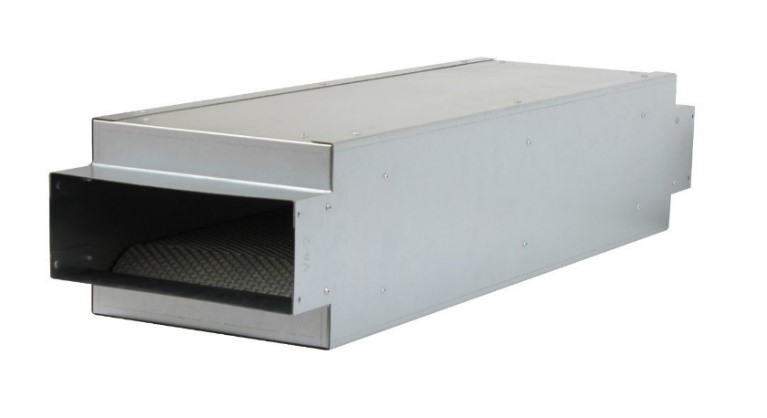
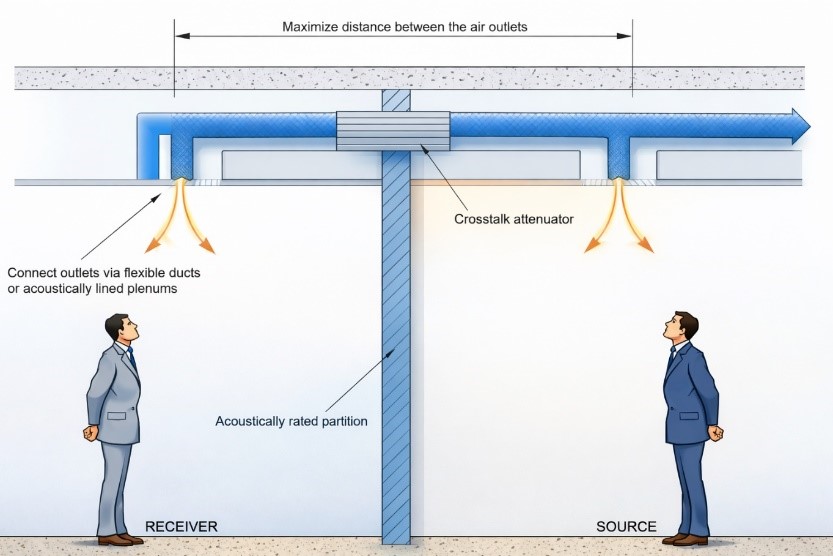
To address this problem, crosstalk attenuators (CTA) are introduced into the HVAC return air path between acoustically sensitive spaces. Unlike conventional approaches that focus primarily on improving partition performance, CTAs directly target the indirect transmission path responsible for sound leakage.
2.1 What is a Crosstalk Attenuator?
A CTA is an acoustically treated duct section with internal sound-absorbing material, designed to attenuate speech frequencies while maintaining airflow.
2.2 Why Use CTA?
In many practical scenarios, wall and ceiling systems already meet the required acoustic ratings, yet speech privacy issues persist due to flanking transmission through HVAC systems.
CTAs are particularly effective because they:
Directly address the dominant flanking path (HVAC crosstalk)
Provide targeted attenuation in speech-critical frequencies
Improve overall system performance without major architectural changes
2.3 Typical Manufacturers
Crosstalk attenuators are available from several HVAC and acoustic solution providers, including:
TROX
Lindab
Halton
Systemair
Ruskin
FlaktGroup
Selection of manufacturer depends on project specifications, performance requirements, and regional availability.
Methodology
A typical design approach for implementing crosstalk attenuators includes the following steps:
1. Identifying Sensitive Spaces from Arch Drawings
Review architectural drawings to identify spaces requiring speech privacy (e.g., offices, consultation rooms, patient areas). Define required privacy levels early based on space function and communication needs.
2 Identification of Crosstalk Paths from HVAC Drawings
Review HVAC layouts to identify sound transmission paths, focusing on shared return air paths, ceiling plenums, and duct connections. These indirect paths can bypass partitions and reduce speech privacy.
3 Acoustic Performance Criteria Definition
Acoustic performance targets for sound insulation should be established based on relevant standards and project-specific requirements.
During the design stage, wall sound reduction criteria are typically defined with reference to established guidelines such as:
HTM 08-01 – Health Technical Memorandum for healthcare facilities
BS 8233 – Guidance on sound insulation and noise reduction in buildings
Other International Standards
During the construction and implementation stage, the required sound insulation performance should be verified using project-specific acoustic documentation, including:
Acoustic design reports
Acoustic drawings
Project specifications
Based on these defined targets, the required level of attenuation through HVAC paths can be determined, which directly informs the selection of appropriate Crosstalk Attenuators (CTA).
4 HVAC Crosstalk Attenuation Requirements
Before selecting crosstalk attenuators, review the sound insulation performance of separating walls between adjacent spaces.
Confirm that wall STC/Rw ratings are appropriate for the room adjacency
If wall insulation is below recommended values, they dominate sound transmission
Where walls meet or exceed recommended STC/Rw values but privacy issues persist, HVAC crosstalk is likely the dominant transmission route.
As a guideline, CTA performance (insertion loss) should be ~10–15 dB lower than the partition STC/Rw to maintain balanced performance and avoid overdesign.
5 CTA Selection
Select crosstalk attenuators based on:
Required insertion loss in the speech frequency range (500–4000 Hz)
Ensure acceptable pressure drop (low Pa) while maintaining required airflow performance
Shape of the attenuator (circular or rectangular), based on duct configuration
Length of the attenuator, selected based on available space, required attenuation, and installation location.
6 Placement Strategy
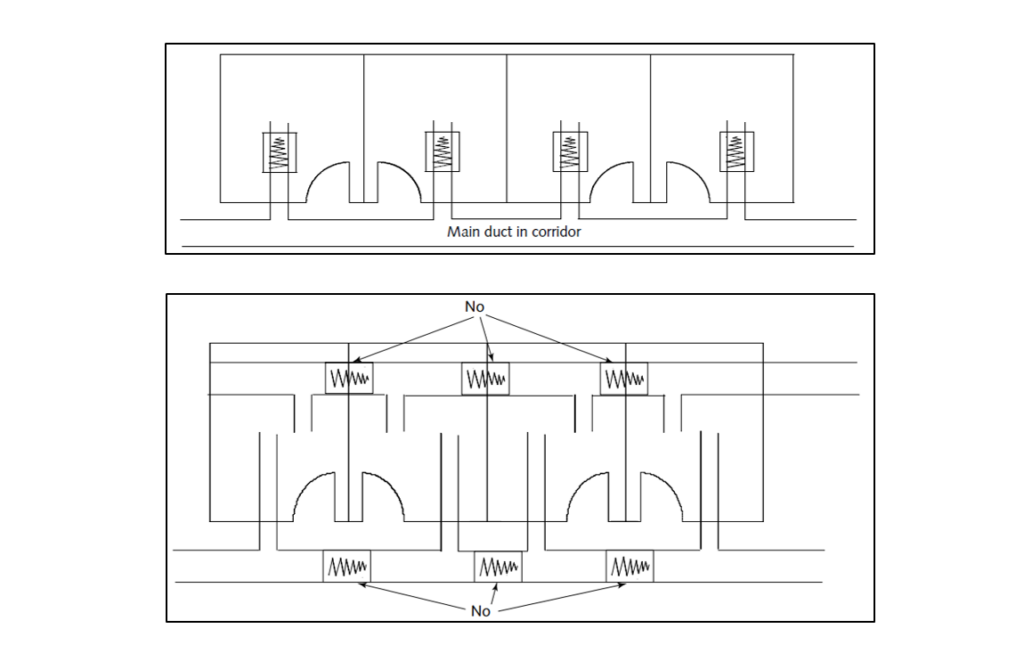
Install CTAs as close as possible to the noise source or between acoustically sensitive spaces. Correct placement is critical to intercept indirect sound paths before they bypass wall and ceiling treatments. The images below indicate appropriate and inappropriate locations for CTA installation.
7 Post-Installation Verification
Assess improvements through on-site measurements or subjective feedback. Verification confirms that the combined performance of walls, ceilings, and CTAs achieves the intended level of speech privacy.
Conclusion
Achieving speech privacy in sensitive environments requires more than compliance with standard acoustic design parameters. HVAC crosstalk plays a significant role in real-world acoustic performance and must be addressed through both passive and engineered solutions.
While strategies such as duct elbows, lining, and extended paths provide initial mitigation, they are often insufficient for high privacy requirements. Crosstalk Attenuators offer a targeted and effective solution, significantly improving speech privacy without major design changes.
A coordinated approach integrating architectural and HVAC design ensures better project outcomes, enhanced user comfort, and long-term reliability in acoustic performance. As building systems become more integrated, addressing such interdisciplinary challenges will remain crucial for future-ready design.
Is HVAC Noise Compromising Privacy in Your Project?
Conserve Solutions helps identify and mitigate HVAC crosstalk through effective acoustic strategies, improving speech privacy and acoustic comfort
An Acoustics Engineer holding a Bachelor’s degree in Civil Engineering and a specialization in Building Acoustics, HVAC Noise Control, and Environmental Sound Analysis within the AEC industry. She is dedicated to delivering practical and sustainable acoustic solutions that enhance occupant comfort, speech privacy, and overall environmental quality in built spaces. Her focus areas include building service noise control, HVAC acoustic optimization, environmental noise assessment, and acoustic performance analysis for healthcare, commercial, and infrastructure projects. She is passionate about integrating acoustic engineering principles into modern building design to achieve efficient and user-centric environments.