HVAC systems may appear technically sound on paper, yet many buildings still experience noise issues due to insufficient acoustic consideration during the HVAC and MEP design stage. Problems such as high background noise and poor speech privacy are rarely caused by the equipment itself, but rather by gaps in system design, airflow planning, duct layout, and equipment positioning etc.
In many cases, these issues are closely linked to the design of Local Equipment and HVAC elements such as FCUs, VAV units, fans, duct routing, diffusers, and flexible ducts. Important factors like equipment placement, return air design, airflow distribution, duct layout, diffuser selection, and flexible duct connections are not always given adequate attention during the design stage. These early design decisions significantly influence the acoustic comfort and overall indoor environmental quality of the space.
Since such issues are difficult and expensive to fix later, they often persist after project completion. This blog highlights common HVAC design mistakes that affect building acoustics and the importance of proper coordination from the beginning.
In this Blog
Key takeaways
Design-Stage HVAC Factors that Impact Building Acoustics
Conclusion
Key Takeaways
HVAC Noise is a major contributor to indoor acoustic problems
Acoustic performance starts at the design stage
Proper HVAC design helps control noise effectively
Better acoustic design improves occupant comfort and building quality
Design-Stage HVAC Factors that Impact Building Acoustics
HVAC acoustic issues are rarely caused by equipment limitations. FCUs, VAV boxes, fans and diffusers are capable of meeting performance standards when used correctly. The real failure lies in the design decisions made during the initial stages of HVAC design detailing, where acoustics are often not treated as a core design parameter.
1. Poor integration of local HVAC equipment in layout design
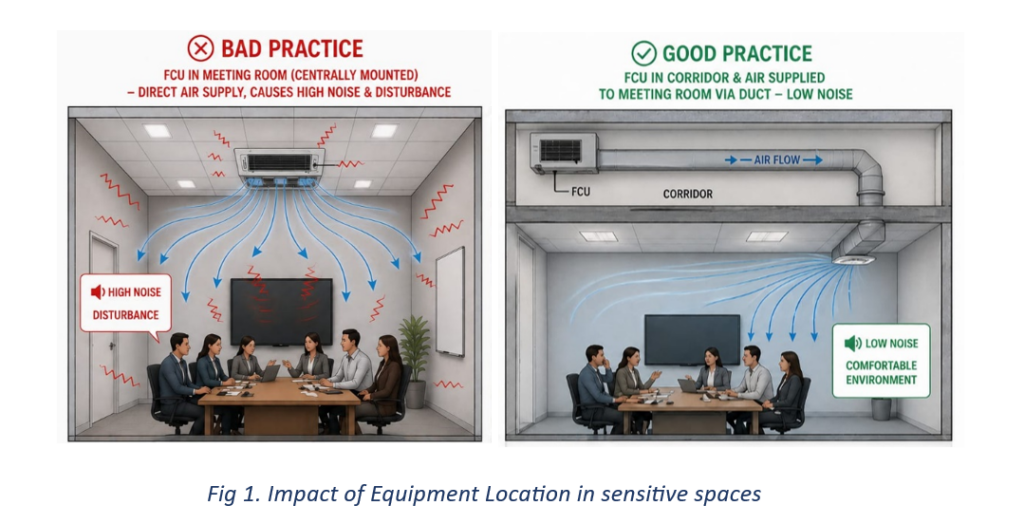
Equipment such as FCUs, VAV terminals, and fans are frequently positioned based on spatial convenience rather than acoustic sensitivity. When units are placed above occupied or quiet zones without proper zoning logic, return, radiated noise and vibration transfer directly into the space, creating persistent comfort issues. Even a well-selected FCU can fail if placed incorrectly.
Design Considerations,
Avoid locating units directly above sensitive zones
Use floating supports / vibration isolators
Coordinate early with acoustic consultants
2. Return air paths designed without acoustic control
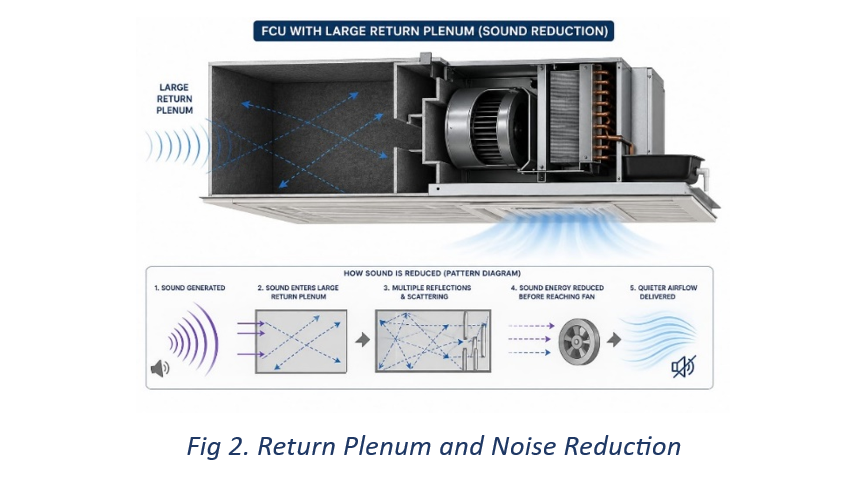
Return air design is often simplified through open plenums or short direct paths. Without acoustic lining or separation, these return routes become direct sound transmission channels, allowing equipment noise to travel freely into occupied areas instead of being attenuated.
Design Considerations,
Use ducted return instead of free return
Maintain distance between unit and return opening
Introduce Return plenum and Acoustic lining
3. Incorrect casing selection (Single skin vs Double skin)
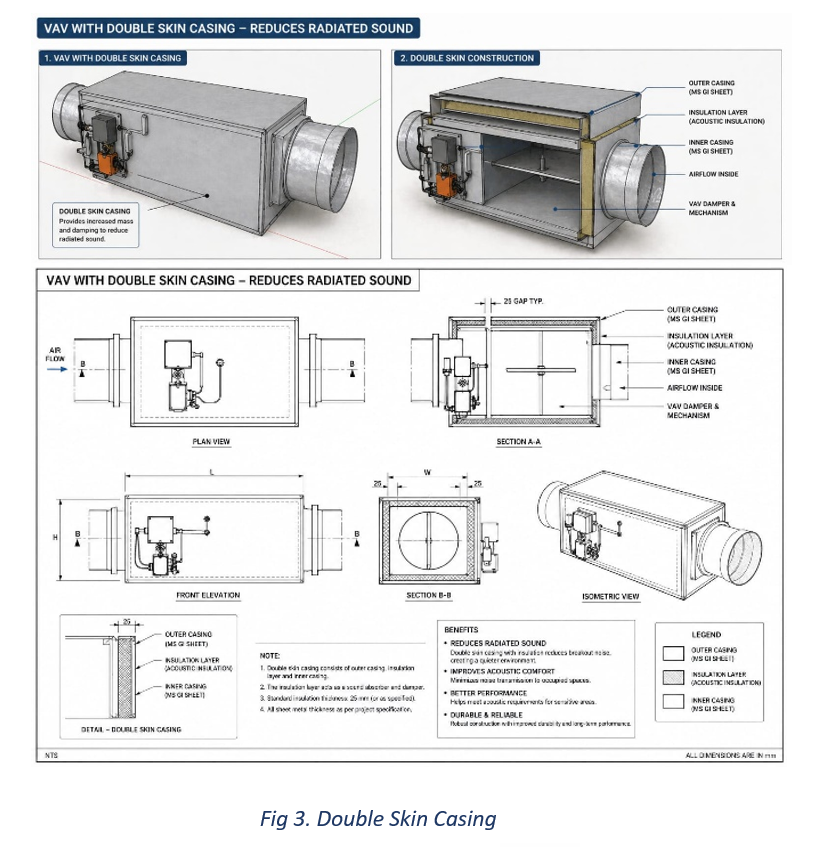
Incorrect selection of HVAC unit casing is a common design-level oversight that significantly impacts acoustic performance. In many projects, single-skin FCUs or similar units are selected in place of specified double-skin constructions due to cost or space considerations. However, this substitution directly affects the ability of the equipment to control radiated noise.
Design Considerations,
Use double-skin units with insulation
Ensure proper casing thickness and lining
4. Supply duct design with insufficient acoustic length
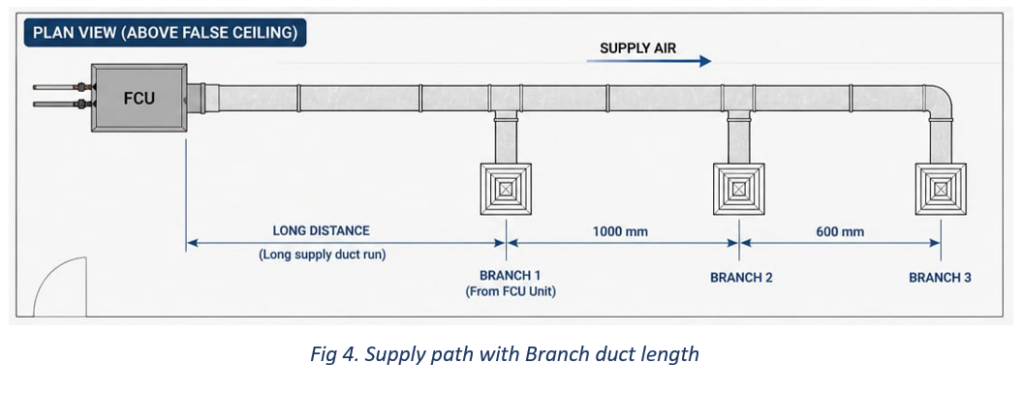
Short supply duct runs are commonly used to reduce space and installation effort. However, reducing duct length also reduces natural sound attenuation. This results in higher noise levels at diffusers and poor control of airborne sound in occupied zones and there is minimum possible ways to control noise
Design Considerations,
To ensure effective sound reduction, a minimum duct length of 1000 mm to 1500 mm should be provided wherever possible between the terminal unit (such as FCU or VAV) and the air outlet.
Use 25 mm or 50 mm acoustic duct liner in accordance with ASHRAE guidelines, as 15 mm thickness is generally not recommended for effective noise attenuation in HVAC systems.
5. Air outlet selection based only on airflow requirements
Diffusers and grilles are often selected based on air volume capacity and acoustic performance. High air velocities at terminals increase turbulence noise, leading to elevated NC levels and reduced speech clarity in sensitive spaces.
Design Considerations,
Maintain low air velocities and Select larger diffusers for quiet spaces
Usually, the resulting diffuser NC level is maintained below 5 to meet typical room NC criteria requirements.
If the number of diffusers in a room increases, the overall sound contribution changes, and the acceptable NC limit may vary accordingly
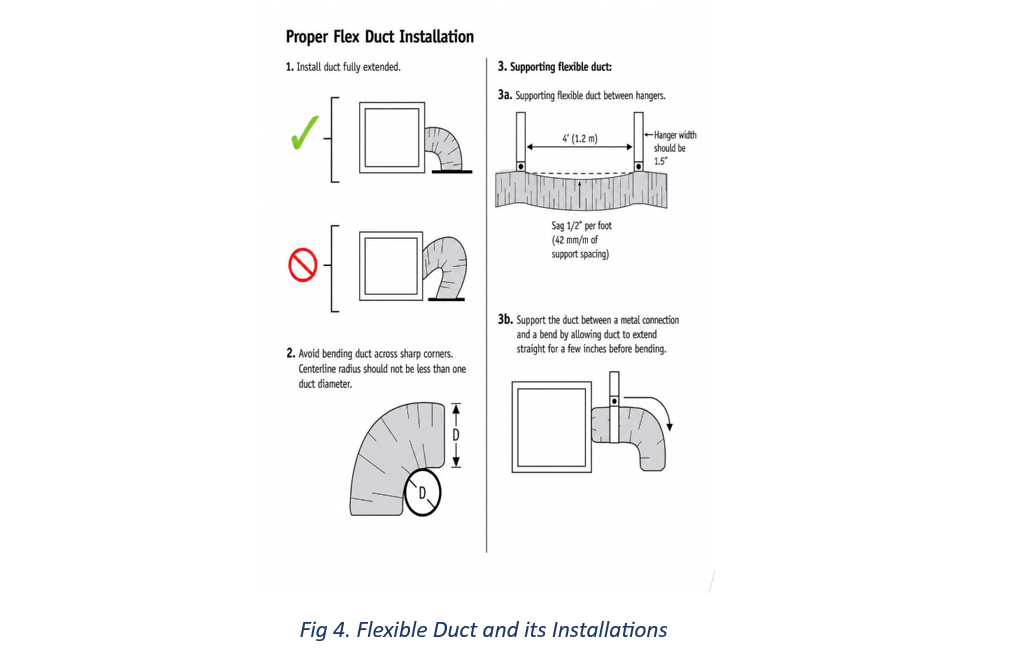
6. Improper use of flexible ducts in critical runs
Flexible ducts are frequently installed unnecessary length and multiple bends. This creates airflow resistance and regenerated noise, which directly impacts acoustic comfort in the occupied space.
Design Considerations,
Use flexible ducts with the proper connections
Avoid excessive bending
Combine with Rigid Ducts and acoustic lining
Conclusion
The HVAC acoustic issues in buildings do not originate from equipment limitations, but from design-level decisions made during HVAC and MEP design coordination. Elements such as equipment location, return air design, casing selection, duct lengths, air outlet choices, and flexible duct usage collectively determine the final acoustic performance of a space. When these factors are addressed in isolation or optimized only for cost and space, the acoustic intent of the design is compromised.
The consistent pattern across all these issues is the absence of integrated acoustic thinking during HVAC design development. Once systems are finalized without acoustic validation, rectification at site becomes difficult, expensive, and often ineffective
The solution lies in treating acoustics as a fundamental design parameter rather than a secondary consideration. Early-stage coordination between HVAC designers, MEP consultants, and supervision teams, along with proper detailing of FCUs, VAVs, fans, ductwork, and air distribution paths, can significantly improve acoustic performance and reduce noise-related issues in buildings.
Are HVAC Noise Issues Affecting Your Project Performance?
Conserve Solution helps identify hidden MEP and HVAC acoustic problems before they become costly site issues – from equipment layout and duct acoustics to airflow noise control and occupant comfort optimization.
An Acoustics Engineer with a strong foundation in Physics and a specialization in Building Acoustics, HVAC Noise Control, and Environmental Sound Analysis within the AEC industry. Aakash is passionate about understanding the science of sound and applying acoustic engineering principles to create comfortable, sustainable, and high-performance built environments. His expertise includes room acoustics, background noise control, acoustic performance optimization for commercial, residential, and infrastructure projects. He actively contributes to improving occupant comfort, speech intelligibility, and environmental quality while supporting multidisciplinary coordination and modern BIM-based project practices.